Have you ever wondered how the microstructure of loess changes after being subjected to various external forces? This study, through innovative microscopic CT 3D reconstruction technology combined with deep learning, precisely tracks the microstructural evolution of loess under consolidation pressure, helping us better understand the mechanical properties and engineering behavior of loess.
Background:
As a typical aeolian soil, loess possesses important engineering geological characteristics due to its high porosity, compressibility, and collapsibility. However, the microstructure of loess is the fundamental reason determining these characteristics. Due to the limitations of traditional CT technology in resolving particle details, especially the blurring of particle contours caused by noise, accurate acquisition is difficult. Against this background, how to improve the resolution of microscopic CT images and the accuracy of particle identification has become a research challenge.


Research objectives:
This paper proposes a method based onconvolutional neural networks(CNN) and content-aware image restoration (CARE) theory, aiming to reconstruct a more precise 3D digital model of loess. Through this method, soil particle contours in CT slices can be effectively identified and segmented, further tracking the microstructural evolution of loess under different consolidation pressures.


Research highlights:
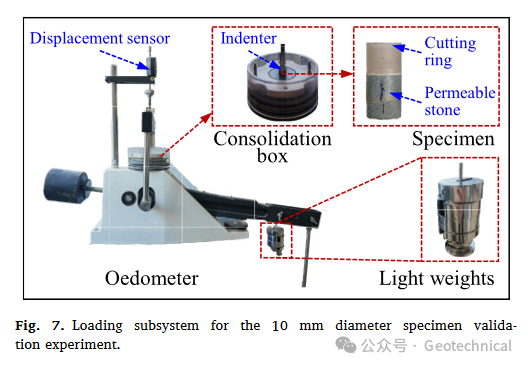
Innovative experimental design
Precise particle identification
Mechanical analysis


Materials and methods:
Loess microstructure evolution tracking system
U-Net convolutional neural network
Soil particle perception model
Pore throat diameter and pore volume fraction analysis
Normal contact force distribution


Conclusions:
Reproducibility:The innovations of this paper are mainly reflected in the improvement of the particle segmentation method and the subsequent analysis of normal contact forces. By improving CT image quality and particle segmentation accuracy, the evolution process of soil particles under different consolidation pressures can be tracked more precisely.
This study not only provides a new analytical method for the microstructural evolution of soils such as loess, but also lays a technical foundation for future research on similar materials. It has broad application prospects in improving the resolution of CT images and the accuracy of particle identification, and has far-reaching impacts on fields such assoil mechanics, engineering geology, and environmental science.
Leading Global Mining Toward Green, Intelligent and Efficient Development! Zoomlion Mining Machinery Global Carnival Successfully Held
下一篇Geotechnical Frontiers | Dual Projects Tackle Geological Challenges, High-Efficiency Empowerment for Southeast Asian Infrastructure: Tysim Machinery Kelly Drilling Rigs Boost China-Thailand Infrastructure Construction

2026-09-28 1157 0

2026-09-24 10586 0

2026-09-23 10714 0

2026-09-22 10808 0

Lize City Air Terminal Underground Main Structure Nearing Completion: Maximum Transfer Walk Under 4 Minutes After Operation

Anti-seepage Curtain for Main Lock Pit of CSCEC Port Shenqiu Double-Line Lock Project Completed on Schedule

All Pile Foundations Completed on Quanzhou Baiqi Channel

Hainan Upgrades Housing and Municipal Infrastructure

First Foundation Concrete Pour Successfully Completed for Zambia Kafue West–Muzuma 330kV Transmission Line EPC Project
Hot News

评论 (0)