July 7
Inaugural Conference of the International Society for Deep Space Exploration
held in Hefei, Anhui Province
As China's first
international science and technology organization in the field of deep space exploration
the establishment of this society marks that the global aerospace community
in the field of engineering technology collaborative innovation
has taken a key step forward
A milestone in engineering collaborative innovation Photo by Xinhua News Agency reporter Zhou Mu The International Society for Deep Space Exploration was jointly proposed by five institutions—the Deep Space Exploration Laboratory, the Lunar Exploration and Space Engineering Center of the China National Space Administration, the Chinese Society of Astronautics, the Chinese Society of Space Research, and France's Planetary Exploration Horizon 2061. It was jointly initiated by 20 domestic academicians and 31 foreign scientists. After more than two years of preparation, it was approved for registration by the State Council in April this year. The establishment of this platform will provide institutional safeguards for breakthroughs in global deep space exploration engineering technology. Technical pathway planning in key engineering fields In response to the three major engineering challenges of deep space exploration, the society has defined the directions for technological breakthroughs: 01 Lunar resource development engineering 02 Asteroid defense engineering 03 Interplanetary exploration engineering Engineering technology transfer and industrial empowerment The society will build a full-chain transformation mechanism of "research—testing—application": Technology incubation: Establish a "Deep Space Technology Innovation Fund" to focus on supporting technology transfer in fields such as extreme-environment-resistant materials (e.g., -230°C ultra-low-temperature alloys) and lightweight structural design. Standard setting: Lead the formulation of the "Deep Space Exploration Engineering Safety Specifications," covering engineering practice standards such as radiation protection and orbital debris management. Industrial collaboration: Jointly build an "Engineering Verification Base" with the Deep Space Exploration Laboratory in Hefei, Anhui, to conduct field testing of equipment such as lunar robots and planetary rovers. Global engineering talent development system In terms of engineering talent development, the society will implement three major programs:

Academician Wu Weiren, the society's first president and chief designer of China's lunar exploration program, pointed out: "Deep space exploration is a typical engineering-driven science. From soft landing on the far side of the Moon to asteroid defense, every step requires precise engineering design and global resource integration. The establishment of the society will promote the creation of joint research mechanisms among countries in core technical fields such as orbital design, materials science, and intelligent robotics."
Focusing on the Chang'e-7 and Chang'e-8 missions, priority will be given to tackling the design of water ice extraction systems in the lunar polar regions. Adopting the technical route of "intelligent robotics + in-situ manufacturing," the plan is to achieve the initial construction of a lunar soil 3D-printing base before 2030. The French Planetary Exploration Horizon 2061 team will provide technical support for lunar surface drilling equipment.
Drawing on the "flyby + impact + flyby" model of China's first near-Earth asteroid defense mission, the society will promote the establishment of global standards for kinetic impact technology. Technical verification of the "terminal stage rock strike" approach has already been launched—using a rocket terminal stage assembly to carry out high-speed impact, which is expected to improve deflection efficiency by 30%. Italy's National Institute for Nuclear Physics will participate in the development of the impact effect assessment system.
For missions such as Mars sample return and Jupiter satellite exploration, priority will be given to breakthroughs in the construction of deep space communication relay networks. The plan is to complete an "Earth-Moon-Mars" communication link composed of lunar orbiters and Mars relay satellites before 2025, reducing data transmission delay to within 15 seconds.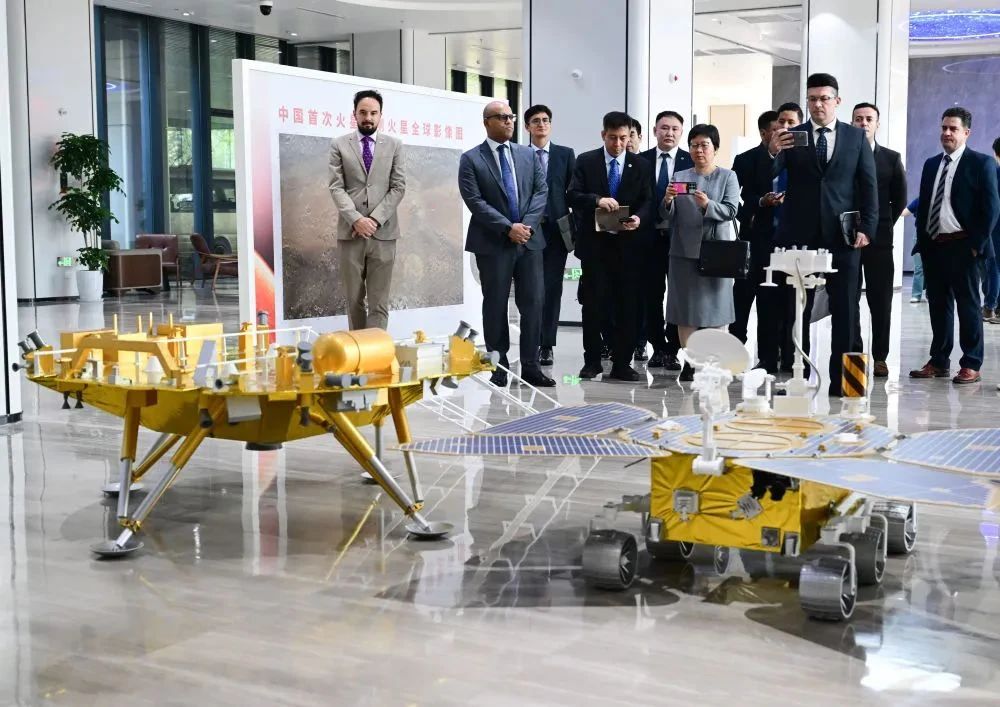
As Michel Blanc, president of France's Planetary Exploration Horizon 2061, said: "Every engineering breakthrough in deep space exploration requires the collision of wisdom among engineers worldwide. The establishment of the society lets us see the realistic possibility of building a 'space engineering community.'" The establishment of this society is not only an important breakthrough in China's international aerospace cooperation, but will also inject new momentum into the development of global deep space exploration engineering technology. With the advancement of major projects such as Chang'e-7 and Tianwen-3, this platform is expected to become a core force leading the revolution in deep space exploration engineering technology.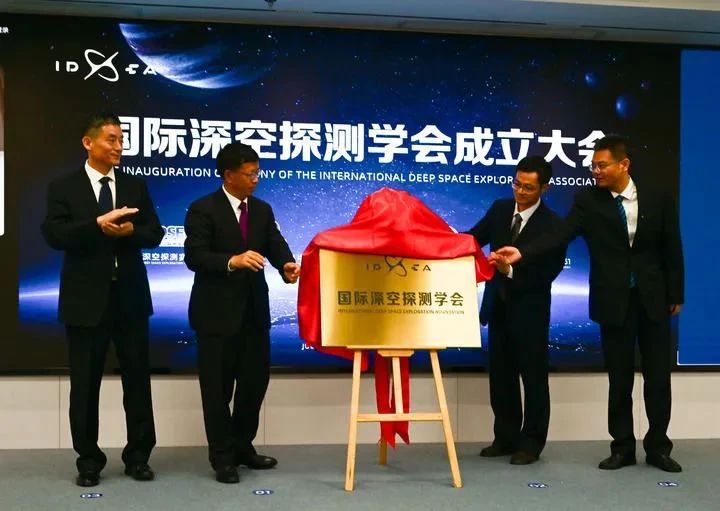
Industry News | Notice of Pre-announcement of Review Results for the 2025 "Beijing Excellent Engineering Survey and Design Achievement Evaluation"
下一篇Company News | Zoomlion Rotary Drilling Rig Supports Construction of 2034 Saudi World Cup Stadium

2026-10-18 0 0

2026-10-18 0 0

2026-10-17 0 0

2026-09-23 10598 0
Lize City Air Terminal Underground Main Structure Nearing Completion: Maximum Transfer Walk Under 4 Minutes After Operation
Anti-seepage Curtain for Main Lock Pit of CSCEC Port Shenqiu Double-Line Lock Project Completed on Schedule
All Pile Foundations Completed on Quanzhou Baiqi Channel

Hainan Upgrades Housing and Municipal Infrastructure

First Foundation Concrete Pour Successfully Completed for Zambia Kafue West–Muzuma 330kV Transmission Line EPC Project
Hot News

评论 (0)