The global construction machinery industry is undergoing profound transformation, shifting from an incremental market to a stock market and from traditional manufacturing toward intelligent upgrading. Driven by the advancement of the "dual carbon" strategy, the eruption of technological revolution, and the restructuring of global industrial chains, Chinese construction machinery enterprises stand at the crossroads of transformation and upgrading. The wave of industry change has arrived—who can seize the initiative in this new round of reshuffling?

Trend One | Export of Used Equipment: A Hundred-Billion Blue Ocean in the Stock Market
China's construction machinery market has moved from an incremental era into a stock era. Shan Zenghai, a deputy to the National People's Congress, chief engineer and vice president of XCMG Machinery, pointed out that China's保有量 of major construction machinery products exceeds 9 million units, and the market scale continues to expand, expected to exceed 150 billion yuan by 2025, with enormous potential in the used equipment market.
As construction and civil engineering projects continue to increase in ASEAN countries in recent years, demand for used equipment has been strong. Taking excavators as an example, in 2024 China's exports of used excavators reached 120,000 units, surpassing for the first time both new-machine domestic demand (100,500 units) and new-machine exports (100,600 units), achieving leapfrog growth compared with the scale of fewer than 10,000 units per year before 2020, marking the industry's formal entry into the era of "stock going global."
This shift not only alleviates the pressure of excessive domestic equipment保有量 but also opens up a new blue ocean for the global layout of Chinese brands. The demand explosion in overseas emerging markets is an important support for this trend. In regions with accelerating industrialization such as Southeast Asia, the Middle East, and Africa, there is a huge infrastructure gap and strong demand for cost-effective equipment.
However, the current used equipment market for construction machinery started late and lacks standardized development, with problems such as an imperfect standards system, information asymmetry, low circulation efficiency, and inconsistent remanufacturing standards, which hinder the circulation of used vehicles and the high-quality development of the industry. To this end, relevant departments and industry insiders are actively seeking solutions.
On April 8, 2024, the Hunan Provincial Administration for Market Regulation and the Hainan Provincial Administration for Market Regulation jointly approved and released the local standard "General Technical Requirements for Maintenance and Remanufacturing of Used Construction Machinery for Export." This standard not only fills the gap in local standards in the field of maintenance and remanufacturing of used construction machinery for export in China but also serves as a model of cross-regional standard cooperation in joint project initiation, review, and release, the first of its kind between Hunan and Hainan provinces. It is believed that as more relevant standards are promulgated and implemented in the future, they will promote the development of China's used equipment export industry toward standardization, scale, and environmental protection. During the 2025 Two Sessions, Shan Zenghai also put forward relevant suggestions on used equipment.

Trend Two | Green Transformation: The Dual Drive of Electrification and Remanufacturing
Under the "dual carbon" strategy, green development has become the underlying color of high-quality development in construction machinery. In 2024, a total of 11,220 electric loaders were sold, a year-on-year increase of 212%, with an annual penetration rate of 10.4%. Products such as electric forklifts and aerial work platforms also grew significantly.
"The electrification of construction machinery is by no means a simple power replacement but a systematic innovation centered on application scenarios," said Zhang Qiang, deputy director of the Electric Products and Technology Research Institute of Guangxi Liugong Machinery, hitting the essence of the industry's transformation. At present, leading domestic enterprises have achieved electrification across all product categories, and electric loaders have shown significant advantages in scenarios such as port handling and mining transportation.
The electrification penetration rate of Zoomlion's intelligent aerial work machinery has exceeded 90%; XCMG Machinery's new energy product revenue grew by 26.76% year on year, with new energy loader revenue nearly tripling... At present, the overall penetration rate of electric construction machinery still needs to improve, with huge room for future development. BCG predicts that China's pure electric construction machinery market will reach an explosive point in 2025-2026, and the penetration rate may reach 30% by 2035.
Remanufacturing technology, as another pillar of green transformation, is embracing a policy tailwind. On May 22, the Ministry of Industry and Information Technology issued the "Notice on Carrying Out the Recommendation of Typical Application Cases of Remanufactured Mechanical and Electrical Products" to accelerate the development of the remanufacturing industry. At the end of 2024, Hunan Province took the lead in issuing the "Reform Plan for Promoting the Remanufacturing System of Construction Machinery," driven by the dual wheels of "laying a foundation with standards and breaking through with brands," to explore the path for industrial transformation.
Trend Three | Intelligent Revolution: Reshaping the Global Competitiveness Landscape
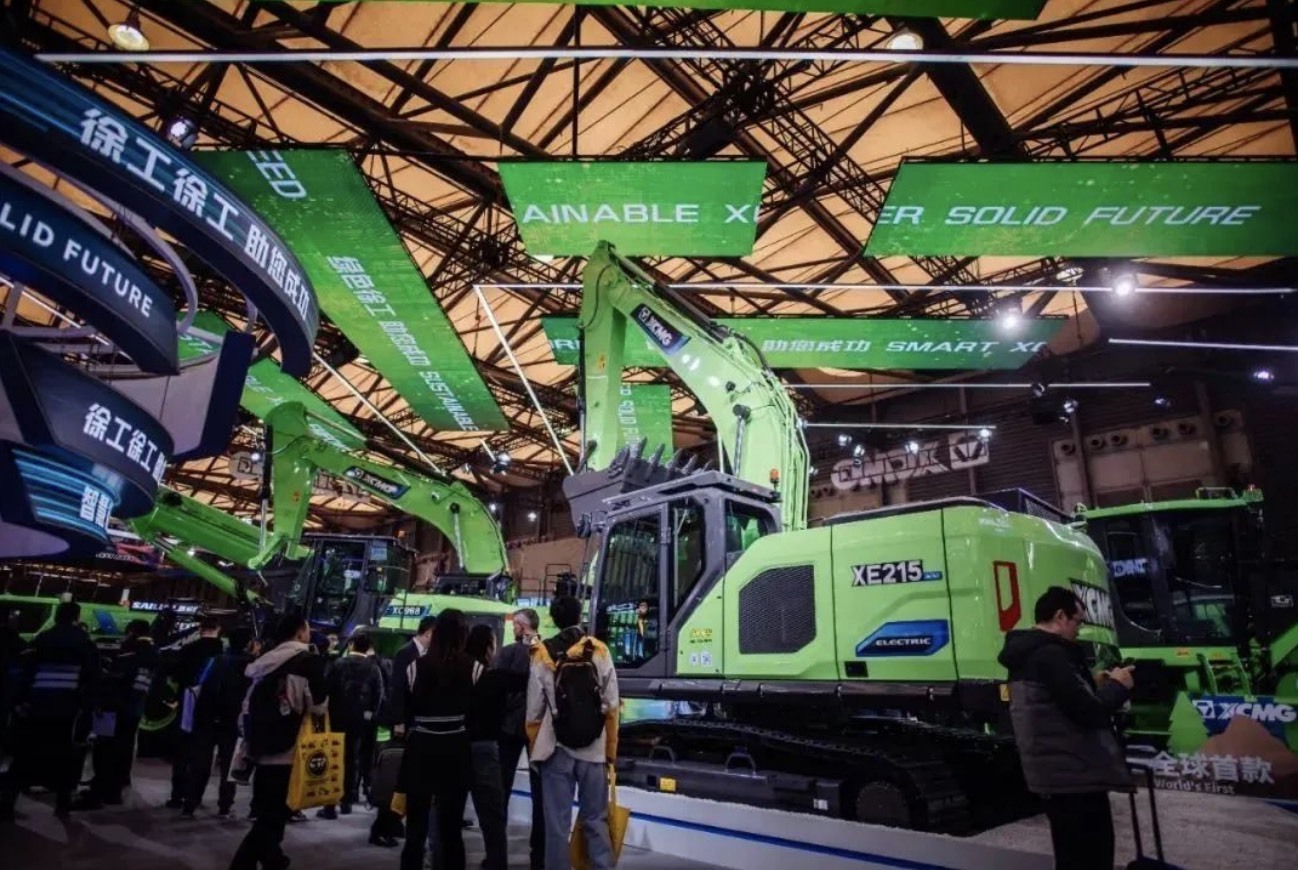
The rapid penetration of intelligent technologies has brought new development opportunities to the construction machinery industry. The deep integration and application of 5G, AI, and the industrial internet provide technical support for the unmanned and minimally manned development of construction machinery, such as mining equipment.
In terms of product intelligence, the high speed, low latency, and massive connectivity of 5G networks make data transmission between devices more timely and accurate, enabling real-time remote control of mining equipment; AI technology endows equipment with autonomous decision-making and intelligent analysis capabilities. Through learning and analysis of massive data, equipment can automatically adjust operating parameters according to different working conditions, improving work efficiency and safety.
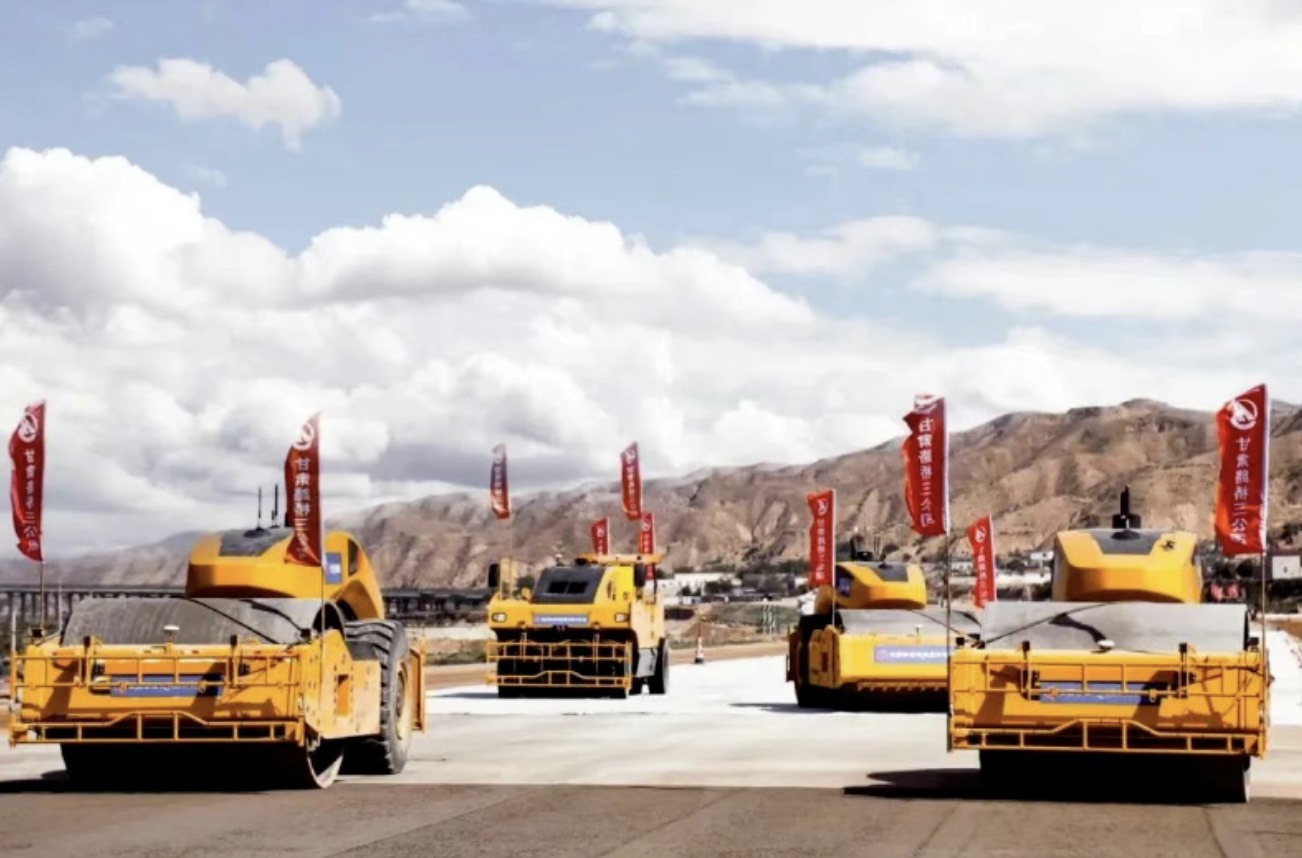
The intelligence of construction machinery equipment has greatly improved its operational efficiency. In the first phase of the Gansu S28 Lingtai-Huating Expressway project, Liugong's first unmanned aerial vehicle swarm operation case for water-stabilized standard construction technology was realized. These devices are equipped with BeiDou positioning systems, collect environmental information through sensing devices and upload it to base stations, and plan optimal operation paths, speeds, and rolling times according to parameters. Three devices require only one person to control, significantly improving construction efficiency and quality and reducing labor costs.
In addition, there is also the intelligence of the production process of construction machinery equipment. For example, Zoomlion's Smart Industrial City achieves an average of one excavator rolling off the line every 6 minutes and one crane manufactured every 18 minutes. Sany Heavy Industry has 33 lighthouse factories built and put into production, among which the Beijing Piling Machinery Factory and the Changsha No. 18 Factory have obtained global "Lighthouse Factory" certification. The layout of overseas smart factories is also accelerating. Sany Heavy Industry successfully established its first overseas "Lighthouse Factory" in Indonesia, achieving full network connectivity and minimally manned production, replicating China's smart manufacturing standards overseas.
Trend Four | Rise of Emerging Markets: Restructuring the Global Market Landscape
Currently, overseas markets are becoming the development focus of China's construction machinery industry. In 2024, China's cumulative construction machinery export value was 382.649 billion yuan, a year-on-year increase of 8.87%. Although export growth has slowed, increasing overseas market share and product gross margins remain the focus of most enterprises. The overseas revenue proportion of many enterprises has reached more than 50%. For example, Zoomlion's overseas revenue in 2024 was 23.380 billion yuan, a year-on-year increase of 30.58%, and the overseas revenue proportion rose to 51.41%, up 13.37 percentage points year on year.
In 2025, the export market still maintains stable growth. From January to April, China's construction machinery export value was 18.07 billion US dollars, a year-on-year increase of 9.01%; excavators, as a representative product of the construction machinery industry, had export performance consistent with the overall industry trend, with 34,405 units exported from January to April, a year-on-year increase of 9.02%.
However, since the beginning of 2025, global trade protectionism has been on the rise, trade barriers in Europe and the United States have been built high, and geopolitical conflicts have continued. China's construction machinery exports face challenges such as reduced price competitiveness, increased cost pressure, and greater potential risks, and international trade risks still require vigilance.
In response, Chinese construction machinery enterprises need to formulate corresponding strategies for the characteristics of different overseas markets, especially paying attention to the broad opportunities brought by emerging markets. According to World Bank data, in 2025 the infrastructure investment demand of Belt and Road partner countries will reach 1.8 trillion US dollars, accounting for 28% of global new demand. Among this, transportation infrastructure (ports, railways) accounts for 35%, concentrated in Southeast Asia (Vietnam, Indonesia) and Central and Eastern Europe (Poland, Hungary); energy infrastructure (photovoltaics, wind power) accounts for 30%, with West Asia and North Africa (Saudi Arabia, UAE) accelerating project implementation due to carbon reduction targets.
Although in the short term China's construction machinery exports face pressure of slowing growth, in the long term they are still in the "setting sail" stage. Construction machinery enterprises should, through technological iteration, regional deepening, and service upgrading, transform from single equipment suppliers into full-life-cycle service providers, ultimately occupying the higher end of the industrial value chain.

Standing at a critical juncture of industrial transformation, China's construction machinery industry should take industry trends as the fulcrum, technological innovation as the core, and a global perspective as the framework, seeking a balance between revitalizing stock and creating incremental growth. Only then can it lead the transformation in the new round of global construction machinery reshuffling and make "China Smart Manufacturing" a core participant in the global industrial chain.
First Batch of Advanced Smart Factories: XCMG Leads the Industry with 21 Sites Listed!
下一篇May 2025 Construction Machinery Market Index Flash Report

2026-10-18 0 0

2026-10-18 0 0

2026-10-17 0 0

2026-09-23 10598 0
Lize City Air Terminal Underground Main Structure Nearing Completion: Maximum Transfer Walk Under 4 Minutes After Operation
Anti-seepage Curtain for Main Lock Pit of CSCEC Port Shenqiu Double-Line Lock Project Completed on Schedule
All Pile Foundations Completed on Quanzhou Baiqi Channel

Hainan Upgrades Housing and Municipal Infrastructure

First Foundation Concrete Pour Successfully Completed for Zambia Kafue West–Muzuma 330kV Transmission Line EPC Project
Hot News

评论 (0)