For large-scale milling operations such as highway reconstruction and expansion, large 2-meter-class milling machines are generally used to meet the requirements for milling output and efficiency. However, for highway expansion, there is a special stepped milling application that not only requires a large milling depth capability and a certain milling efficiency, but also needs to balance mobility and safety.
In stepped milling, when the cement-stabilized base layer needs to be removed at a narrower width than the surface layer according to design requirements, the large body size, milling width and operating weight of 2-meter milling machines become disadvantages in such applications.
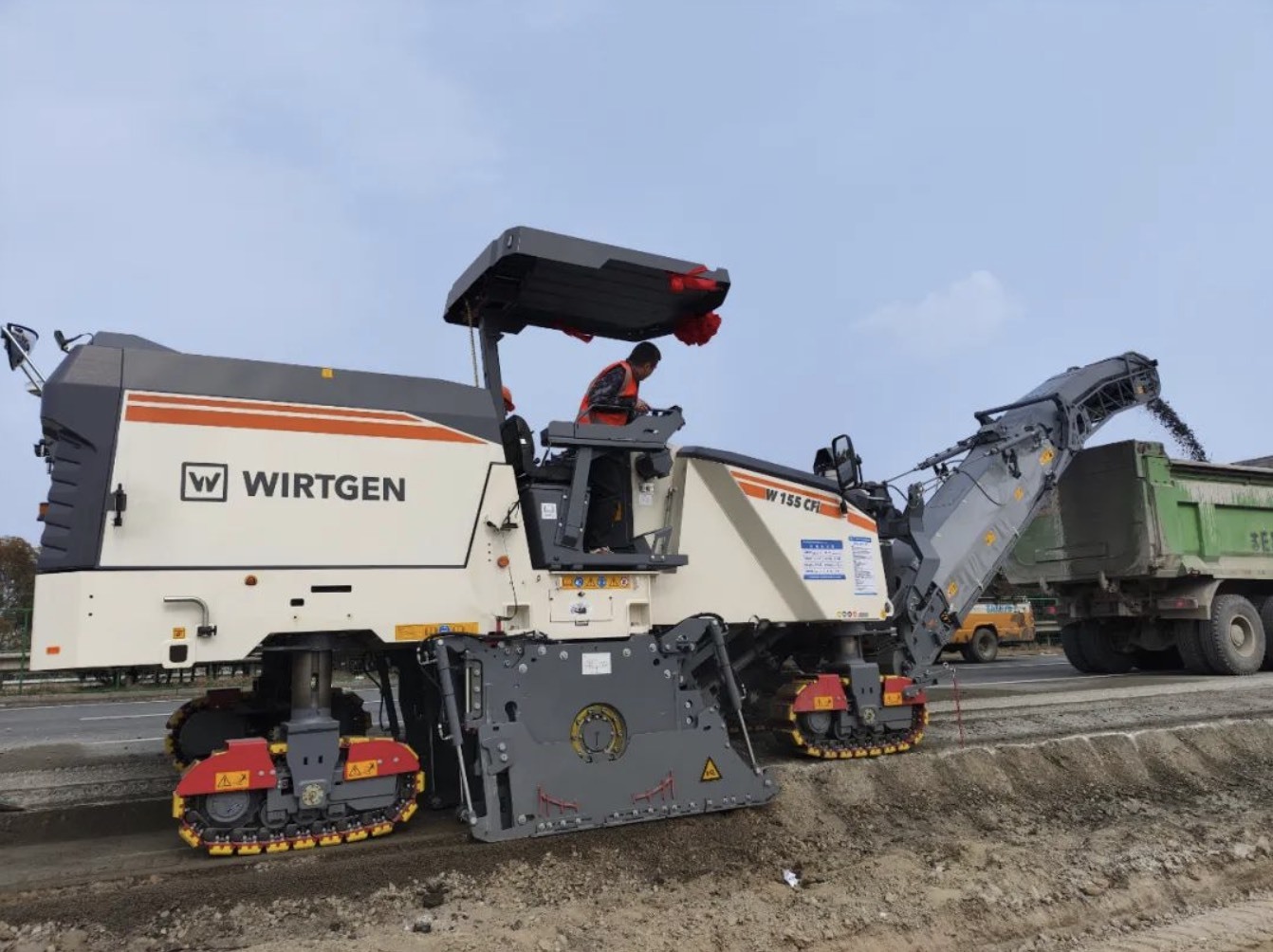
Since Wirtgen first introduced the medium milling concept to the market, its representative models W 155 CFi / W 125 CFi have become better choices for stepped milling applications, offering flexibility and safety, meeting design requirements while significantly reducing fuel consumption and saving construction costs.
For this reason, in a recent expansion project on the Taicang to Changzhou section of the Shanghai-Wuhan Expressway, more than 5 medium milling machines have already been put into stepped milling tasks. Click the video below and let Xiao Wei take you to see the Wirtgen medium milling machine W 155 CFi in action!
Project Overview
The Taicang to Changzhou section of the Shanghai-Wuhan Expressway is an important part of the Shanghai-Wuhan National Expressway, connecting southern Jiangsu and Shanghai. It is one of the main access routes for Jiangsu Province and Shanghai Municipality and occupies an important position in the national and regional road network. As traffic volume has increased year by year, the capacity of this key transport route, which has been in service for nearly 20 years, has struggled to adapt to economic and social development and people's travel requirements.
This expansion project adopts a scheme of widening on both sides of the subgrade. The 25 km section from Taicang North Hub to Dongbang Hub is expanded to a two-way ten-lane technical standard, while the remaining sections are expanded to a two-way eight-lane technical standard.
The road widening requires tie-in treatment with the new pavement. Because the foundation settlement of the old and new roads differs, longitudinal reflective cracks are very likely to appear at the tie-in positions. To ensure tie-in quality and prevent longitudinal reflective cracks in the pavement, stepped milling of the original emergency lane pavement is usually required, followed by layered filling and compaction.
In addition, the surface layer structure of the original pavement also needs to be milled, and an overall overlay treatment is carried out in the final stage of construction to ensure the integrity of the pavement after expansion and driving comfort.
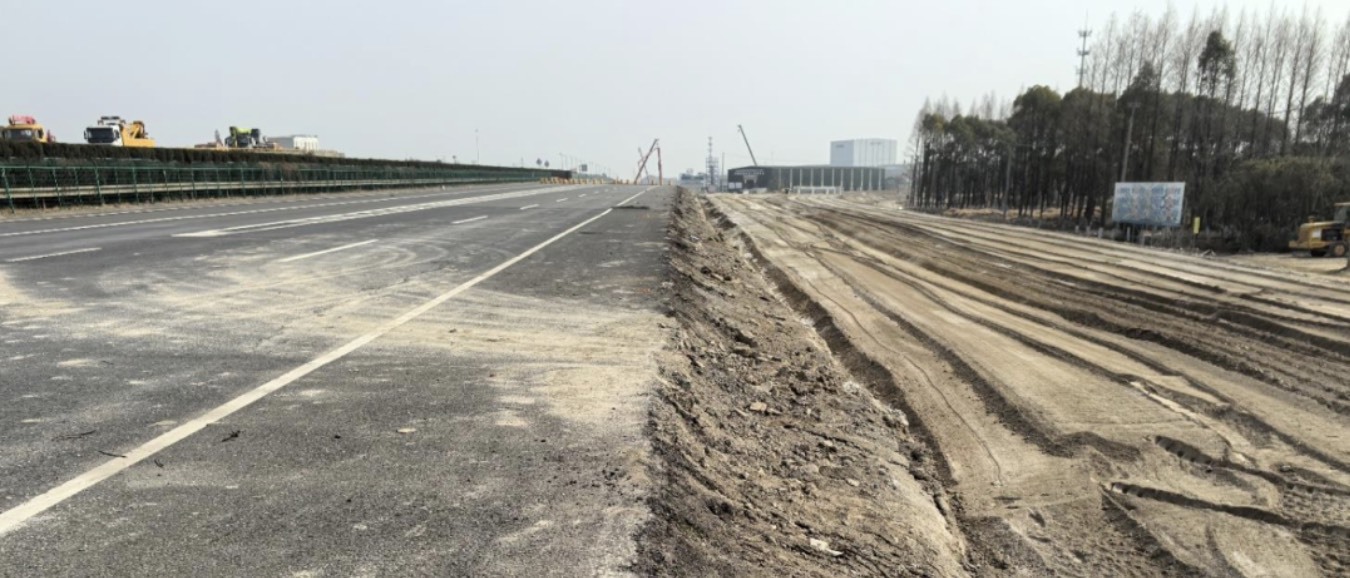
Emergency lane awaiting stepped milling
Advantage 1 | Economy
The Wirtgen W 155 CFi medium milling machine has a maximum milling depth of 33 cm, which can fully meet the milling thickness requirements of each step in different pavement structure layers. Taking this case as an example, from 8 cm / 12 cm asphalt layer milling to about 20 cm cement-stabilized base layer, it can handle all with ease. Compared with large milling machines, the W 155 CFi has an obvious fuel consumption advantage, and the operating cost per machine-shift drops significantly. This efficient and energy-saving characteristic enables it to create higher economic benefits for construction companies while meeting construction design requirements.
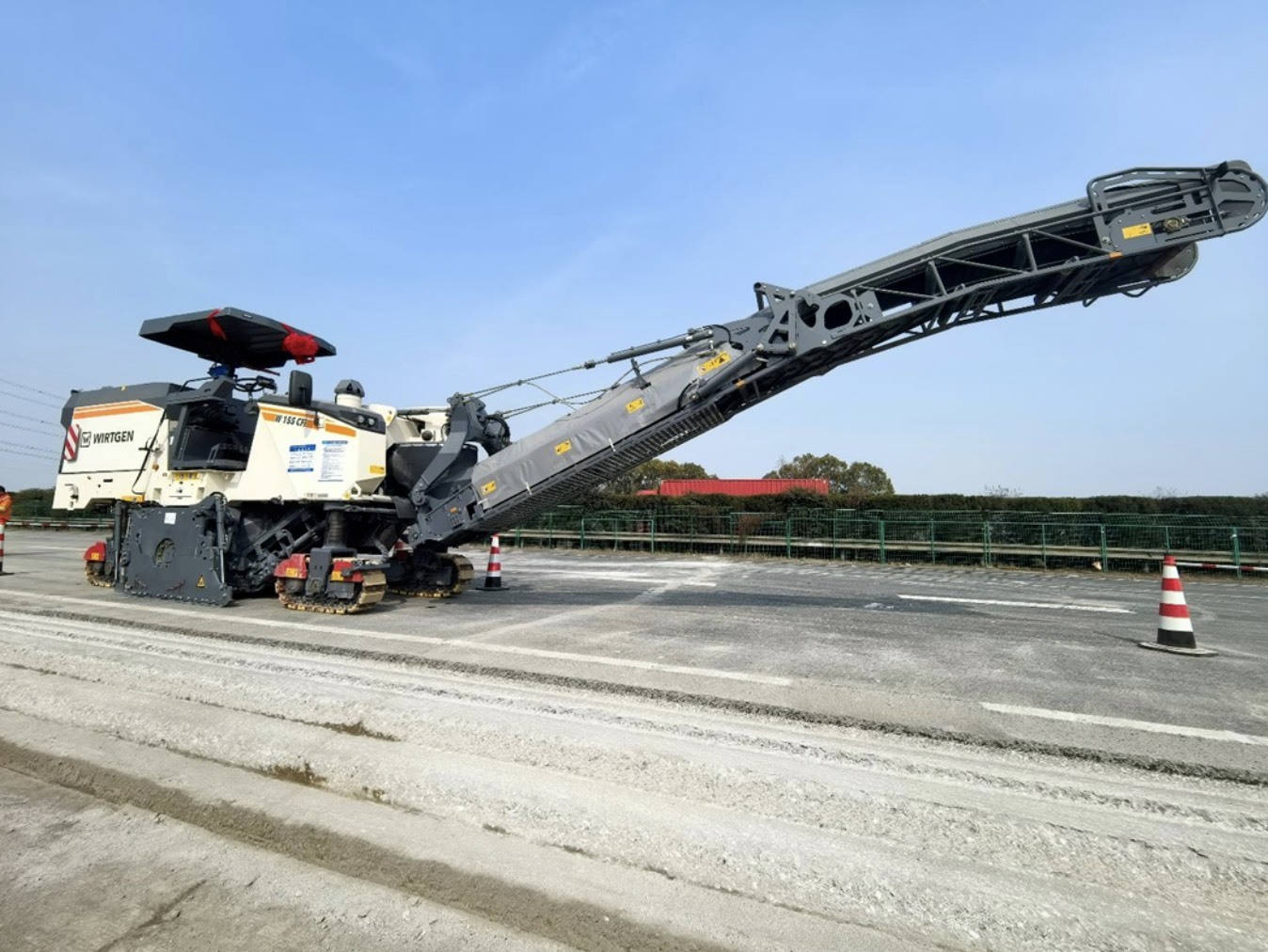
Five layers from the asphalt surface layer to the lime soil layer have been milled, forming the milling steps
In addition, for the contractor, a smaller milling width means reducing the amount of material removed while meeting process requirements. Given the current high prices in the sand and aggregate market, this saves considerable main material costs for subsequent paving construction.
Advantage 2 | Flexibility
The ISC intelligent travel system ensures that the machine automatically adjusts the speed difference between the inner and outer tracks during milling, making travel more stable. Compared with large milling machines, the lighter body weight and smaller body size naturally make operation more maneuverable and flexible.

It is worth mentioning that the Wirtgen medium milling machine W 125 CFi can also use the FCS milling drum quick-change system to quickly switch to a 1200 mm wide milling rotor when milling the asphalt surface layer, achieving higher milling output; and when addressing cement-stabilized base layer milling needs, it can flexibly switch to a 600 mm or 900 mm milling rotor for faster milling.
Advantage 3 | Safety
The PTS machine posture control system equipped on the W 155 CFi eliminates the complex operation of manually adjusting the machine's rear legs. It allows the operator to set the machine's longitudinal pitch angle or keep it parallel to the working surface according to site needs, and automatically maintain it while traveling.
When entering and exiting milling pits and grooves, the rear legs automatically adjust the machine posture following the front legs. These automated operation functions can avoid the risks caused by manual misoperation and improve operational convenience and construction safety. In addition, the more compact body and narrower milling width of medium milling machines compared with large milling machines can also avoid hidden dangers caused by backfill construction.
Changsha International Construction Equipment Exhibition | Free! Free! Claim your free CICEE e-ticket! Invite friends to team up and tour the exhibition—double rewards await you!
下一篇April 2025 Construction Machinery Market Index Flash Report

2026-10-18 0 0

2026-10-18 0 0

2026-10-17 0 0

2026-09-23 10598 0
Lize City Air Terminal Underground Main Structure Nearing Completion: Maximum Transfer Walk Under 4 Minutes After Operation
Anti-seepage Curtain for Main Lock Pit of CSCEC Port Shenqiu Double-Line Lock Project Completed on Schedule
All Pile Foundations Completed on Quanzhou Baiqi Channel

Hainan Upgrades Housing and Municipal Infrastructure
First Foundation Concrete Pour Successfully Completed for Zambia Kafue West–Muzuma 330kV Transmission Line EPC Project
Hot News

评论 (0)