A snowy mountain nation, where rivers surge ceaselessly;
Diverting water and building dams, bringing benefit to countless livelihoods.
On April 9, the completion and official operation ceremony of the Sanjen Khola Hydropower Station project in Nepal was held in the capital, Kathmandu. Deepak Khadka, Minister of Energy, Water Resources and Irrigation of Nepal, said that the Sanjen Khola Hydropower Station was put into operation during Nepal's dry season and was completed on the occasion of the 70th anniversary of the establishment of diplomatic relations between Nepal and China; such practical cooperation helps to further strengthen the ties between the two countries.
At this moment, at the Sanjen Khola Hydropower Station, located on the left bank of the Sanjen River at the southern foot of the Himalayas, the unit rotors are spinning at high speed, delivering a steady stream of electricity to where it is needed.
The Sanjen Khola Hydropower Station is located in the Rasuwa district in north-central Nepal, about 65 kilometers in a straight line from the capital Kathmandu, and was built by the Sinohydro Bureau 11 under an EPC general contract. The water intake basin of the project lies entirely above 3,400 meters in elevation, with a generating head of 1,015 meters, making it one of the few ultra-high-head hydropower stations in the world. The project has a total installed capacity of 78 megawatts and, once completed, will provide 412.4 million kilowatt-hours of cheap clean electricity each year, enough to meet the electricity demand of about 700,000 people and injecting strong vitality into Nepal's power exports.
What it bears witness to is perseverance
As an enterprise that has been deeply engaged in Nepal for more than thirty years, Sinohydro Bureau 11, under the leadership of Power Construction Corporation of China, has given full play to its country-specific and hydropower construction advantages, building a number of major water conservancy and hydropower projects and winning high praise and a fine reputation from the people and government of Nepal.
Nepal, rich in hydropower resources, sees hydropower station construction as a fairly common local undertaking. But when it comes to the construction of the Sanjen Khola Hydropower Station in Nepal, the eyes of local people still light up with something different.
"In the Rasuwa district, there are as many as six hydropower station projects under construction at the same time as the Sanjen Khola Hydropower Station. Based on our understanding of previous hydropower construction cycles, a hydropower station of the same scale would take at least about 10 years to build. We did not believe that the Sanjen Khola Hydropower Station could be completed within 5 years. Today we have seen a different kind of construction organization and speed, which has refreshed our understanding and at the same time set a benchmark for the construction of other hydropower stations in the region," said Bida Nidhi Khanal, then the highest administrative chairman of the Rasuwa district, after visiting the project.
The Sanjen Khola Hydropower Station officially broke ground in October 2019, and the construction process lasted five years, including 18 months of preliminary preparation work such as environmental impact assessment, tree felling, access roads, and construction adits. During construction, the project department took the initiative in planning, upheld the concept of "safety first, quality foremost," invited domestic and foreign experts to participate deeply in preliminary guidance and review work, formulated special construction plans, and worked closely with all participating parties to successively complete a number of systematic and major milestone objectives, including impoundment of the headworks, water conveyance of the diversion works, and unit installation.
In September 2022, Tan Shunli came to the Sanjen Khola Hydropower Station project as project manager. He said: "Sanjen (Khola) is one of the toughest projects in terms of conditions in our company. It is the highest in elevation among our projects under construction, with the dam at 3,400 meters. It is also the coldest in winter, minus fifteen to minus twenty degrees, with heavy snow sealing off the mountains. But as people in the hydropower industry, we cannot be picky."
The Sanjen Khola Hydropower Station project is only a 28-kilometer drive from China's Gyirong Port. Continuing to climb from the dam area at 3,400 meters, one can see the national border in the primeval forest at 4,000 meters. After taking office, Tan Shunli told his colleagues that we are working on a project right by the national border, and we must set the minds of our loved ones on the other side of the Himalayas at ease, so that we can also work with greater peace of mind. He organized everyone to build camps and improve the living environment, and also installed facilities such as basketball hoops in the completed camps to create a relatively comfortable living environment for his colleagues. In order to complete the construction task as early as possible, some employees of the project did not go home for several years, always holding their posts in the place closest to the motherland.
What it bears witness to is standards
As one of the few hydropower stations with a head of over one thousand meters built by Sinohydro Bureau 11, the project attaches great importance to technological innovation and scientific research summarization, adopts Chinese standards, and has all design, construction, consulting and supervision, equipment manufacturing, and construction management carried out by Chinese enterprises.
The Sanjen Khola Hydropower Station project area as a whole is located in a high-cold primeval forest region, where the terrain and geology are complex. October to March of the following year is winter, and April to September is the rainy season. According to statistics from on-site personnel, rainy and snowy weather accounts for more than 50 percent of the year, and the frequent rain and snow have brought enormous challenges to project construction.
During project construction, all cadres and employees feared neither hardship nor fatigue. With a high sense of responsibility and mission, they cooperated sincerely with the participating units, pooled their wisdom and efforts, strictly controlled project quality supervision and management, and stayed far ahead in progress, repeatedly refreshing the understanding of peers and government agencies and creating a demonstration and benchmark for project construction in the same region.
Three impulse turbine generator units were installed inside the project's underground powerhouse. Each unit rotor has an overall length of 5,360 millimeters and a diameter of 2,422 millimeters, with a total weight of 51 tons after assembly. During the rotor hoisting process, the project team strictly controlled the construction quality of each procedure and summarized experience in a timely manner, ensuring that the cylindricity of each rotor after magnetic pole assembly was within the range of plus or minus 0.40 millimeters and the verticality did not exceed 0.2 millimeters, with all technical indicators superior to standard requirements.
The installation of the first section of penstock in the station's inclined shaft was limited by the geological conditions of the tunnel, and the installation of the steel pipe transport track was full of challenges, so the inverted installation method could only be adopted. Faced with the difficulty of steel pipe transport, the project department organized discussions many times and ultimately adopted the method of laying a trolley transport track in the inclined shaft section, with the steel pipes pulled downward by a winch, greatly improving construction progress and quality. Because the tunnel was narrow, only 50 centimeters of space were left for installation and welding, bringing great difficulty to welding speed and quality. For this reason, the project adopted internal groove welding to reduce the amount of external wall welding, completing the welding task with both quality and quantity guaranteed.
The Sanjen Khola project successively underwent two major design changes caused by geological influences. Among them, the No. 1 inclined shaft was redesigned due to geological problems, changing from the original inclined shaft form to a vertical shaft form. The "magnetic guidance equipment pilot hole drilling plus one-time forming back-reaming technology" was successfully applied in the project, with deviation controlled to three ten-thousandths, which reflects the rigor of Chinese standards and, even more, a sense of responsibility for the future of the project. This technology is the first of its kind in the domestic and international construction technology of Sinohydro Bureau 11 and has important guiding significance for the application of new technologies and the construction of similar projects.
During construction, the project department obtained 1 provincial-level construction method, 1 company-level construction method, and 8 company science and technology progress awards, and obtained 3 patents. These technological innovations have also accumulated valuable experience for the company's subsequent construction of similar projects.
What it bears witness to is spirit
In early 2020, just as the project was getting started, it was affected by the COVID-19 pandemic: personnel and materials could not enter the site, customs passage was closed, and a lockdown was imposed within Nepal. All project personnel responded actively and carried out close prevention and control, while working with all participating parties to overcome difficulties, always adhering to the people-oriented concept and ensuring the normal progress of construction.
On December 28, 2022, a sudden heavy snowstorm swept across northern Nepal. The Sanjen Khola Hydropower Station project itself is at high elevation with low temperatures, and after the heavy snow, fierce winds raged and temperatures plunged. Within just a few hours, the water and power systems of the entire site failed, and on-site production was once interrupted. In order to carry out emergency repairs as quickly as possible, all Chinese personnel held their posts on site, crawling forward with extreme difficulty through one-meter-thick snow and rapidly carrying out repair work in the biting cold. The corporate spirit of "constant self-improvement and the courage to surpass" was fully demonstrated in this fight against the snow disaster and in resuming work and production.
Explosive materials are key to hydropower construction. Affected by the international situation, after October 2022, the project's supply of explosive materials was interrupted, and construction once stalled. To break through the impact of the explosive material supply cutoff, the project department did not wait or rely on others. Under the leadership of Tan Shunli, it actively communicated with the group company and the owner unit and applied to handle procurement procedures from China. After six months of submitting and tracking materials and repeated revisions, and after layer upon layer of approval by multiple departments including Nepal's Ministry of Energy, Water Resources and Irrigation, Ministry of Energy, Ministry of Home Affairs, Ministry of Defence, Ministry of Law, and Ministry of Foreign Affairs, the project finally obtained approval from the Chinese Embassy and completed customs clearance of the first batch of explosive materials imported from China on April 14, 2023. This creative measure not only received positive coverage from many Nepalese media, but also provided a guarantee for the on-schedule completion of project construction milestones and boosted the confidence of Chinese-funded enterprises in Nepal.
In the later stage of project construction, in order to ensure that the key overweight equipment, the main transformer, could smoothly reach the site, the project department organized personnel to carry out detailed repairs on the access road and dispatched 7 Chinese employees leading 15 local personnel to escort the main transformer on foot, making three round trips between Gyirong Port and the powerhouse totaling 164 kilometers, ultimately ensuring the safe arrival of the main transformer at the site.
"On this project, every one of us has withstood the trials of various natural conditions such as high altitude, severe cold, and remote location, and it is precisely such an environment that has forged our Sanjen team's extraordinary team spirit of fearing no hardship and daring to tackle difficulties!" said Li Feng, the project's production manager, with emotion.
When snowmelt turns into electric current that lights up the streets and alleys of Kathmandu and powers the machine tools of factories, it also illuminates a nation's dream of energy self-reliance. With the philosophy of "build one project, erect one monument, make friends in one place, open up one market, and cultivate a batch of talent," Sinohydro Bureau 11 has forged a model of China-Nepal friendly cooperation and added a vivid stroke to the sustained deepening and development of friendly relations between the two countries.

Sanjen Khola Hydropower Station

Powerhouse
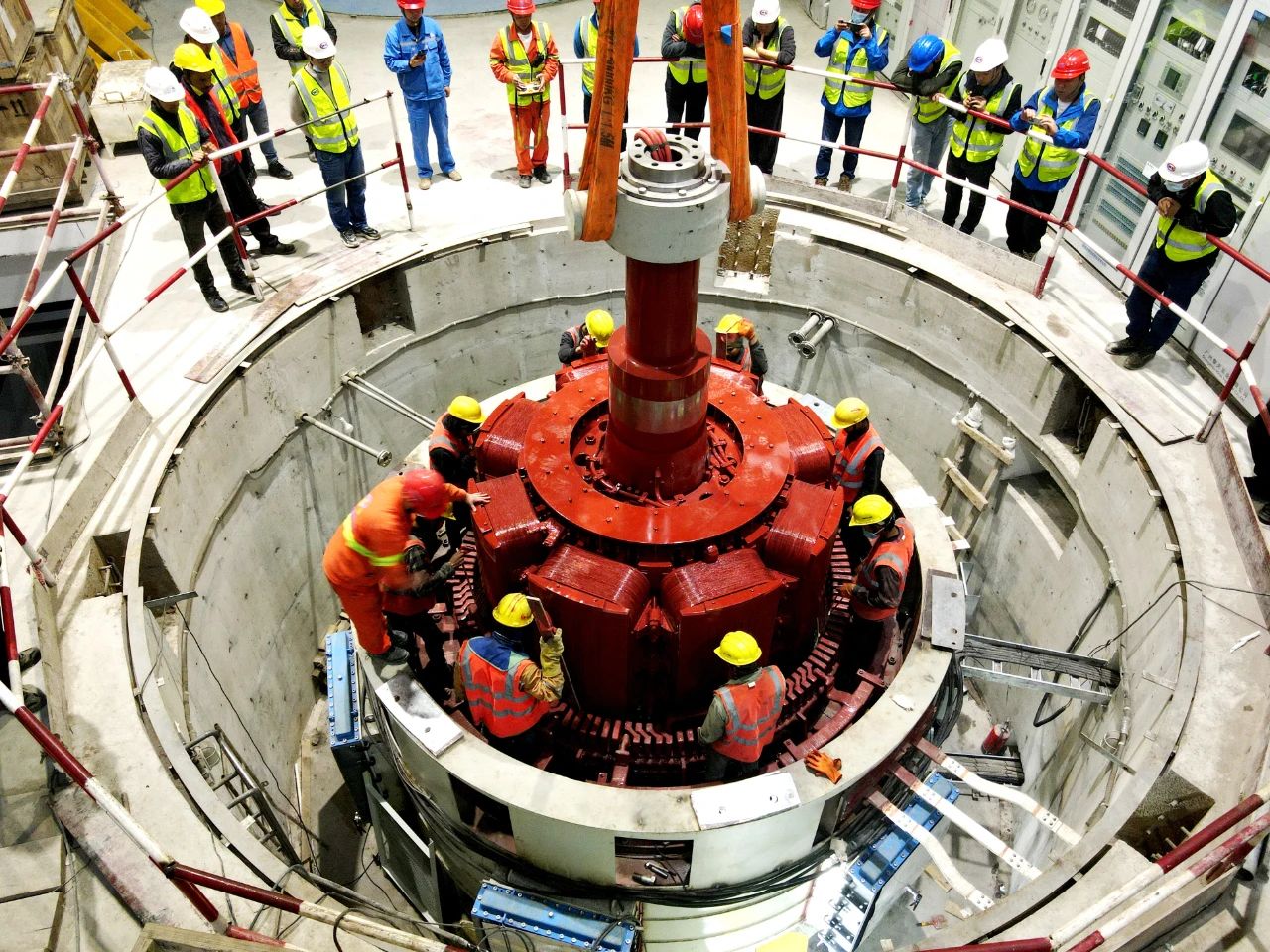
Rotor installation
First Batch of Wind Turbines Successfully Grid-Connected at Liaoning Faku 150 MW Wind Power Project
下一篇Hengshui Housing and Urban-Rural Development Bureau Leaders and Geotechnical Industry Expert Team Hold Symposium on Promotion and Application of Hengshui "Golden Foundation Award" Winning Project

2026-10-18 0 0

2026-10-18 0 0

2026-10-17 0 0

2026-09-23 10598 0
Lize City Air Terminal Underground Main Structure Nearing Completion: Maximum Transfer Walk Under 4 Minutes After Operation
Anti-seepage Curtain for Main Lock Pit of CSCEC Port Shenqiu Double-Line Lock Project Completed on Schedule
All Pile Foundations Completed on Quanzhou Baiqi Channel

Hainan Upgrades Housing and Municipal Infrastructure
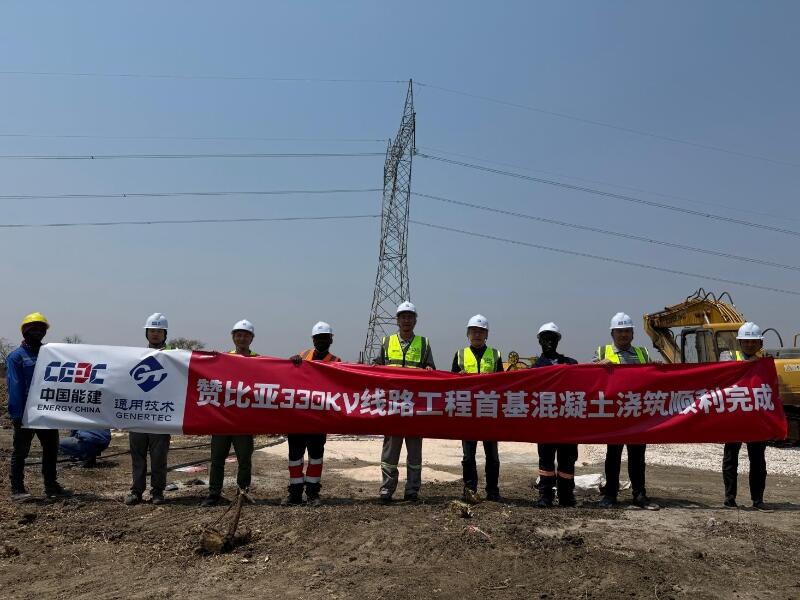
First Foundation Concrete Pour Successfully Completed for Zambia Kafue West–Muzuma 330kV Transmission Line EPC Project
Hot News

评论 (0)