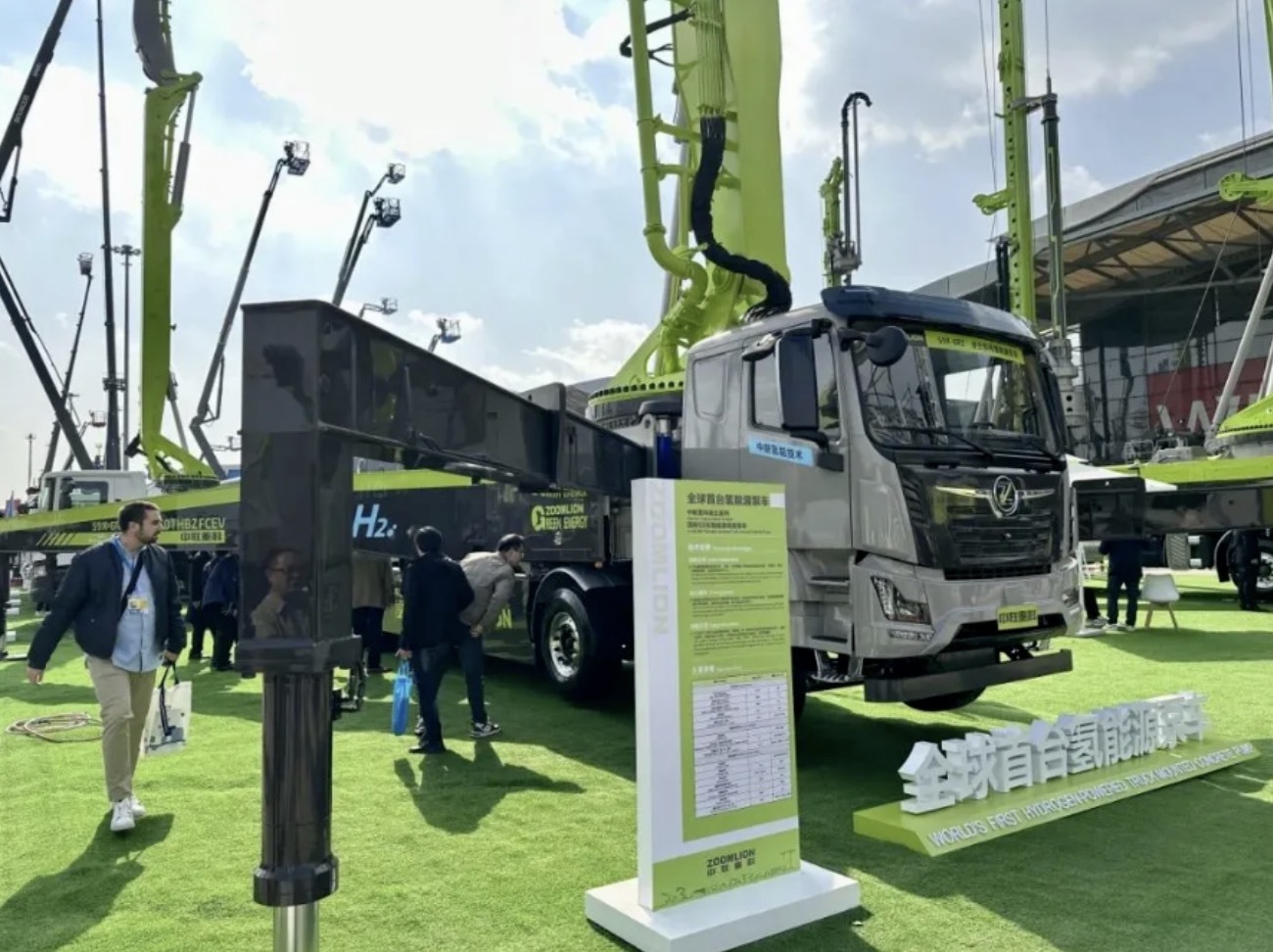
Against the backdrop of global carbon neutrality, hydrogen energy, as a clean energy source, has long become a hot topic of competitive research among major manufacturers in the field of construction machinery. Upstream and downstream players in the construction machinery industry supply chain have achieved remarkable results in the R&D and application of hydrogen-powered construction machinery, setting a benchmark for the industry's development.
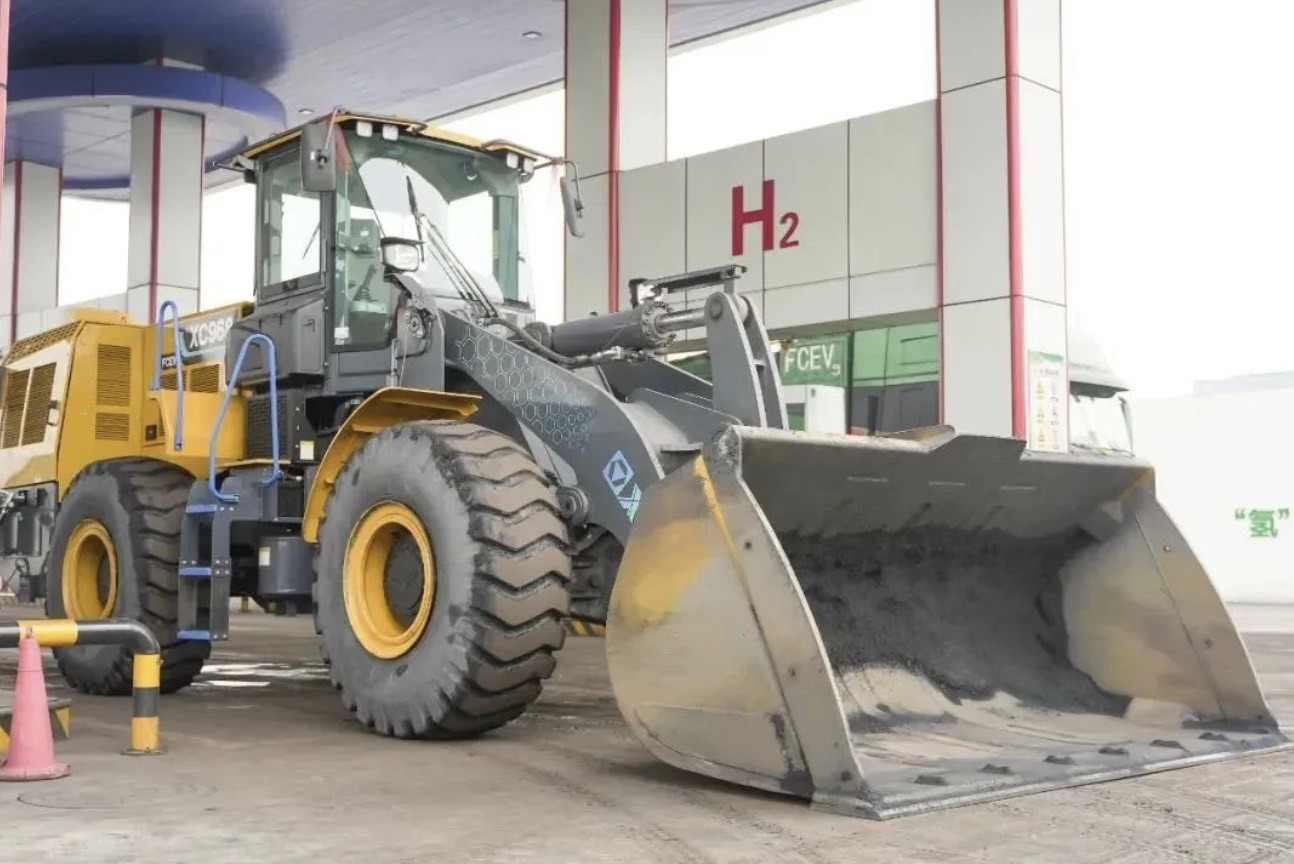
At present, leading domestic OEMs such as Zoomlion, XCMG, and Sany Heavy Industry have already laid out hydrogen technology R&D and product innovation, making important progress in hydrogen fuel cells, hydrogen storage systems, and hydrogen equipment production. For example, Zoomlion launched the world's first hydrogen-powered concrete pump truck, and earlier still, Zoomlion's first fully self-developed skid-mounted hydrogen refueling station was successfully delivered to Inner Mongolia Huadian's hydrogen heavy truck project; XCMG established a hydrogen energy company mainly targeting heavy trucks and dump trucks, and also launched the 6-tonne hydrogen fuel cell loader XC968-FCEV; Sany Heavy Industry launched multiple hydrogen-powered excavators, cranes, and other products. In addition, Taiyuan Heavy Machinery Group, Tongli Heavy Industry, Boleton, and many other enterprises have also laid out hydrogen equipment.

Beyond the OEMs, major brand enterprises upstream in the supply chain have also made achievements in hydrogen products. SinoHytec is a leading enterprise in China's hydrogen fuel cell engine manufacturing, and its self-developed hydrogen fuel cell engines have passed national mandatory inspection. Weichai Power's self-developed 13L hydrogen internal combustion engine has achieved a thermal efficiency of 41.8% and has already been equipped on Sinotruk's Huanghe heavy truck models. The Cummins M15H hydrogen engine, with a maximum rated power of 530 horsepower, is suitable for excavators, wheel loaders, drilling rigs, milling machines, and air compressors.
In addition, hydrogen technology has been applied in multiple scenarios, such as the 6.5t hydrogen loaders, 125t hydrogen mining trucks, and hydrogen heavy trucks operating in Shanxi, Xinjiang, Xiong'an New Area, Ningbo, and other places, as well as the muck trucks in the Lingang Special Area of the Shanghai Pilot Free Trade Zone.
Advantages of Hydrogen-Powered Construction Machinery
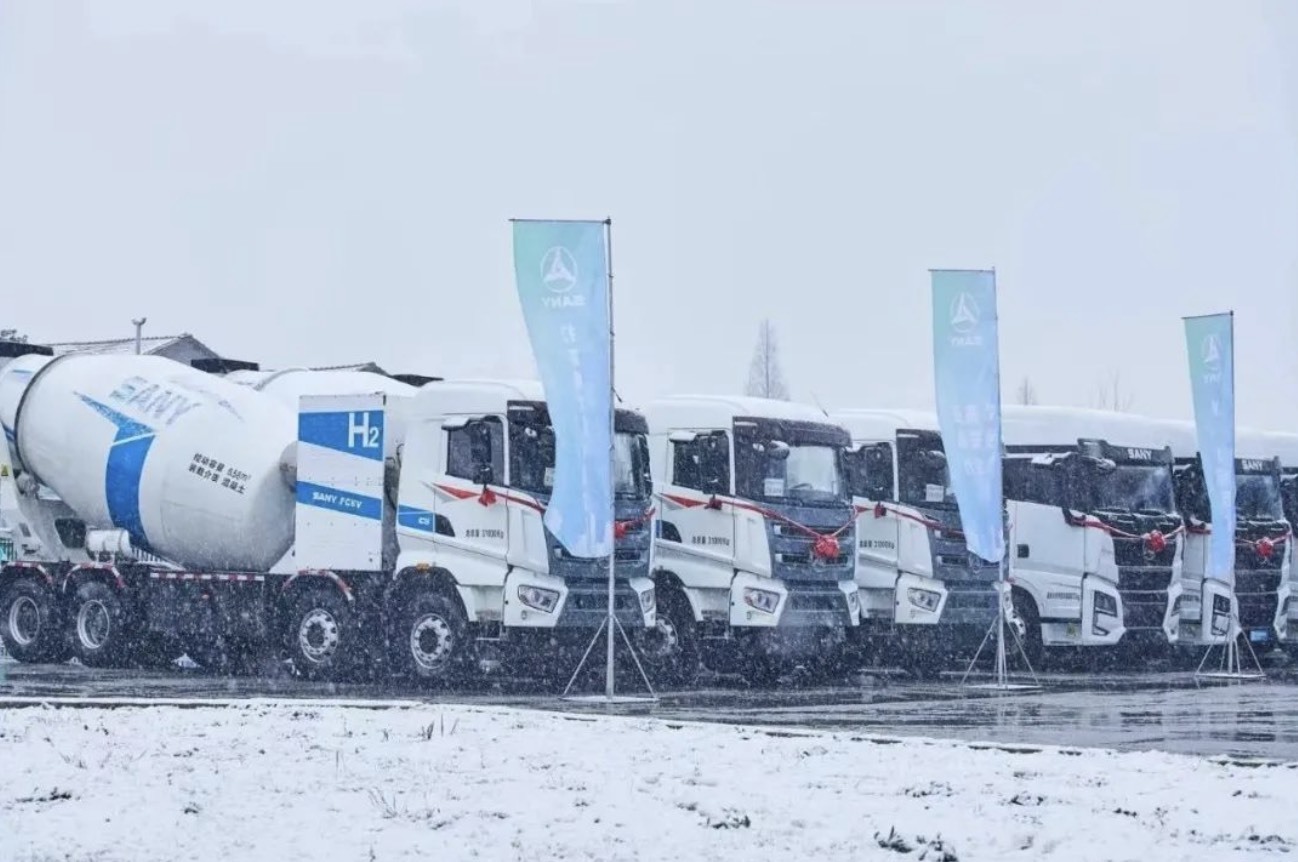
It can be said that developing hydrogen energy products has become a common understanding among upstream and downstream players in the construction machinery industry supply chain. So we cannot help but ask: what exactly is the magic of hydrogen-powered construction machinery that makes it worth the vigorous development by major manufacturers? Overall, the most prominent advantages of hydrogen-powered construction machinery are significant environmental benefits as well as high efficiency and high endurance.
1 Significant environmental benefits
As a clean energy source, hydrogen energy's application in the field of construction machinery delivers extremely significant environmental benefits. Traditional fuel-powered construction machinery emits large amounts of carbon dioxide, nitrogen oxides, particulate matter, and other pollutants during operation, causing serious pollution to the environment and exacerbating the greenhouse effect. Hydrogen-powered construction machinery, by contrast, uses hydrogen as fuel, and the only product of hydrogen combustion is water, achieving zero carbon emissions and fundamentally eliminating the environmental harm caused by exhaust emissions from traditional fuel-powered construction machinery, bringing a positive and far-reaching impact on improving air quality and mitigating climate change.
2 High efficiency and high endurance
Hydrogen energy has the characteristic of high energy density, far higher than that of traditional fuel, which enables hydrogen-powered construction machinery to obtain more durable and powerful power output with the same volume or mass of energy storage. Taking hydrogen fuel cells as an example, their power generation efficiency can typically reach 65%-85%, compared with the combustion efficiency of traditional diesel engines, which is only 35%-40%. In terms of endurance, hydrogen-powered construction machinery also demonstrates unique advantages. After a single hydrogen refueling, hydrogen-powered construction machinery and equipment can often operate continuously for a long time, meeting the needs of high-intensity, long-duration operation scenarios such as large-scale mining and large-scale construction site work.
Difficulties Facing Hydrogen-Powered Construction Machinery
At first glance, hydrogen energy seems very promising, in line with the times and highly efficient. However, we must also recognize that there are quite a few difficulties facing the development of hydrogen energy today. Musk, the world's leading figure in new energy vehicles, has repeatedly attacked hydrogen energy, calling hydrogen fuel cells the "stupidest and worst technology." Why does Musk hold such an extreme view? This brings us to the shortcomings of hydrogen energy.
1 The dilemma of hydrogen energy supply
There are mainly three ways to produce hydrogen: gray hydrogen, blue hydrogen, and green hydrogen. Gray hydrogen is produced from fossil fuels, with mature technology and low cost, but it generates large amounts of carbon emissions during production. As the world's largest hydrogen producer, China's current hydrogen sources are mainly gray hydrogen, which conflicts significantly with the environmental goals pursued by hydrogen-powered construction machinery and makes it difficult to meet their demand for clean energy. Blue hydrogen can reduce carbon emissions by more than 70%, and green hydrogen is close to zero carbon emissions, but the production costs of these two methods are increasingly expensive, making large-scale promotion impossible at present. This has led the current development of hydrogen energy into a dilemma: using hydrogen-powered construction machinery first requires generating large amounts of carbon emissions.
2 Technical standards and testing systems need improvement
At present, the technical standards and testing systems related to hydrogen fuel cells are not yet sound and cannot meet the needs of the industry's rapid development. There is a lack of comprehensive standard system support in areas such as hydrogen production, storage and transportation, refueling, and the evaluation and testing of hydrogen fuel cells from components to systems under actual working conditions. This leaves hydrogen-powered construction machinery facing many uncertainties in product R&D, production, and promotion. The imperfect testing system also makes it difficult to conduct comprehensive and effective testing and certification of hydrogen-powered construction machinery before it enters the market, so product reliability and safety cannot be fully guaranteed.
3 High purchase cost
Compared with traditional diesel equipment, the prices of hydrogen-powered construction machinery are generally higher, forcing enterprises to bear greater cost pressure when purchasing. In addition, hydrogen fuel cell engines, as the core component of hydrogen-powered construction machinery, are not yet mature enough in technology; the service life of domestic hydrogen fuel cell engines is currently around 20,000 hours, considerably shorter than that of diesel equipment. Higher vehicle prices combined with shorter service life undoubtedly bring enormous cost pressure to customers.
4 Relatively few hydrogen refueling stations
Hydrogen refueling stations, as important infrastructure for hydrogen-powered construction machinery, are currently relatively few in number, restricting the development of hydrogen-powered construction machinery. It is understood that a hydrogen refueling station with a daily refueling capacity of 1,000 kilograms and a 70MPa refueling system requires a construction cost of at least 20 million yuan. Such high construction costs make it difficult for the number of hydrogen refueling stations to grow rapidly and to form a complete refueling network, making it difficult for hydrogen-powered construction machinery to develop.

But then again, aren't the difficulties facing hydrogen-powered construction machinery today exactly the difficulties that electric construction machinery faced a few years ago? High prices, immature technology, and incomplete supporting facilities—each of these was a difficulty once encountered by electric construction machinery. Looking back now, although these problems have not been completely solved, the situation for electric construction machinery is already much better than it was three or four years ago. We believe that hydrogen-powered construction machinery can, like electric construction machinery, overcome the various difficulties it currently faces in the future and develop quite well.
Hardcore Heavy Industry! New Products Reach New Industry Heights, Weichai Makes a Full-Scale Push
下一篇Strength Recognized! Multiple Zoomlion Products Selected for the 2024 Low-Noise Construction Equipment Guidance Catalog

2026-09-28 1157 0
2026-09-24 10586 0
2026-09-23 10714 0
2026-09-22 10808 0

Lize City Air Terminal Underground Main Structure Nearing Completion: Maximum Transfer Walk Under 4 Minutes After Operation

Anti-seepage Curtain for Main Lock Pit of CSCEC Port Shenqiu Double-Line Lock Project Completed on Schedule

All Pile Foundations Completed on Quanzhou Baiqi Channel

Hainan Upgrades Housing and Municipal Infrastructure
First Foundation Concrete Pour Successfully Completed for Zambia Kafue West–Muzuma 330kV Transmission Line EPC Project
Hot News

评论 (0)