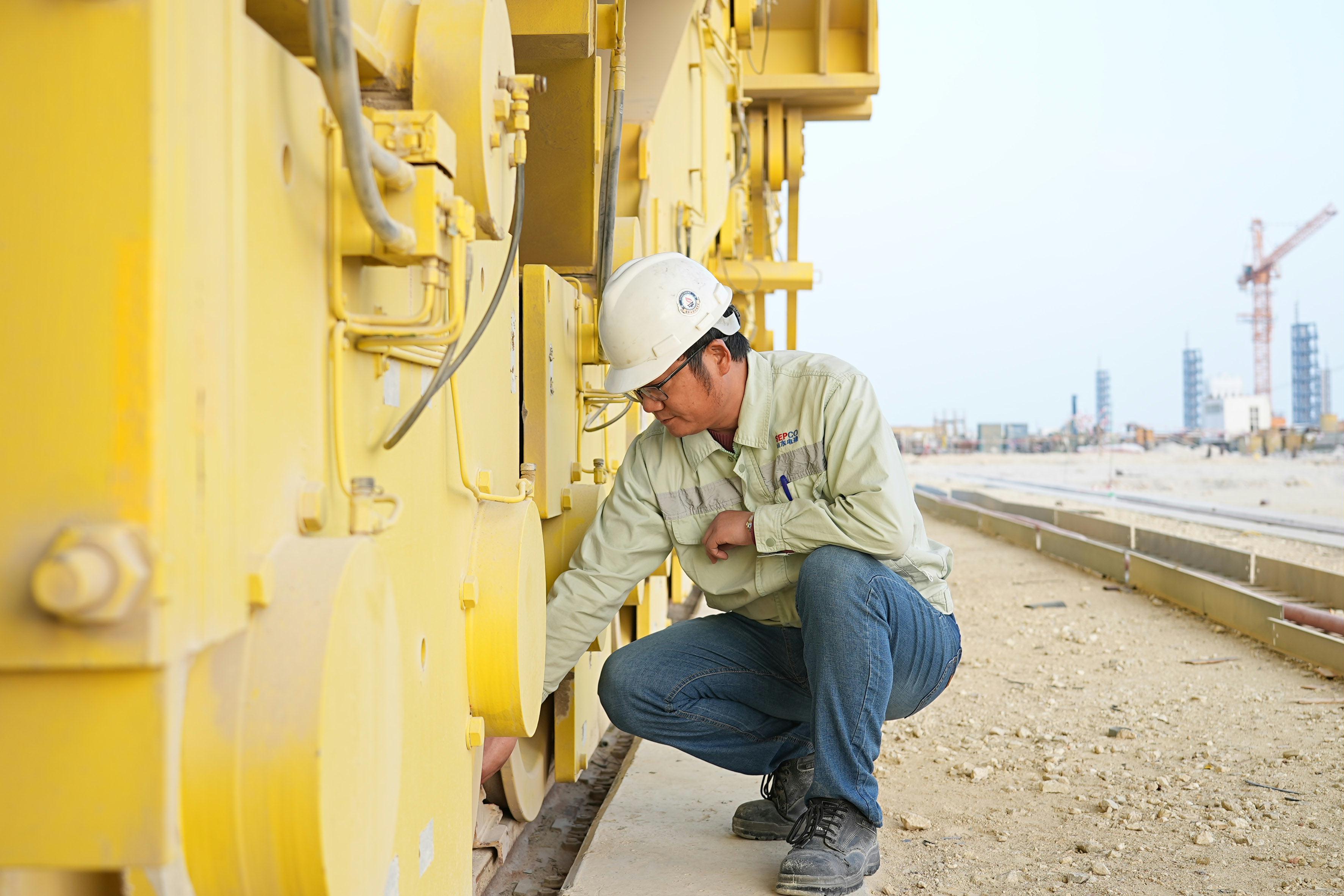
Standing on the 133-meter-high main girder of the 1,600-ton giant gantry crane and gazing into the distance, one takes in a panoramic view of neatly arranged modern workshops, rows of portal cranes, enormous dry docks, and drilling platforms docked for maintenance. This is the Saudi King's Port project built with full commitment by SEPCO—the world's largest "super shipyard." Whenever the conversation turns to how this giant gantry crane, ranked first in the world for lifting height, was lifted precisely and flawlessly into place, project team members invariably mention one name—Wang Yi—their words filled with respect and admiration.
As a seasoned expert with 20 years of deep experience in the power construction industry, Wang Yi relied on his outstanding professional knowledge and unwavering conviction to create an awe-inspiring "engineering miracle" high above the ground. He not only successfully organized this complex and highly difficult lifting task, but also demonstrated through his actions the sense of responsibility and commitment of power construction professionals, making him a role model truly worthy of the name in the eyes of his colleagues.
A Decade of Tempering: Craftsmanship Forged in the Hot Soil of the Middle East
In the spring of 2015, Wang Yi clutched his boarding pass, pushed a heavy luggage cart, and, carrying his ideals and boundless passion for the power construction cause, boarded a flight to Saudi Arabia. That year he had just turned 35, and that departure marked a decade of arduous journeying.
From the depths of the desert to the shores of the Persian Gulf, over 10 years Wang Yi's footprints have covered the hot soil of the Middle East. He not only honed solid professional skills and accumulated rich international engineering management experience across multiple Saudi Aramco projects, but also witnessed the growth of SEPCO's international business. In Phase I of the Aramco MGS Gas Compression Plant project, he was responsible for underground pipeline network construction management and pipeline sandblasting and painting operations; two years of diligent effort laid a solid foundation for the project. In Phase II of the MGS Gas Compression Plant project, he moved on to HVAC construction management, further enhancing his professional competence and management experience. In 2019, per work arrangements, he was transferred to the Saudi King's Port project, responsible for on-site JV and IK equipment installation, where he encountered the greatest challenge of his career—the installation of giant gantry cranes.
The Saudi King's Port project is designed to install a total of 4 single-girder, large-tonnage, long-span gantry cranes. Among them, Dry Dock No. 4 is equipped with one 1,600-ton and one 500-ton giant gantry crane; once installed, the 1,600-ton giant gantry crane has a net lifting height of 113.5 meters, ranking first in the world, with a combined lifting capacity of 2,100 tons, placing it among the world's leaders. Dry Dock No. 5 is equipped with two 500-ton giant gantry cranes, with a net lifting height of 83 meters and a combined lifting capacity of 1,000 tons. This was the first time SEPCO—and indeed the entire PowerChina Group—had ventured into marine engineering construction, and the first time it faced the complex challenge of giant gantry crane lifting. For Wang Yi, who was called upon in a crisis, this was undoubtedly an enormous test.
"Love the trade you take up, and master the trade you love"—this is Wang Yi's attitude and his consistent working principle. Opening his "Gantry Crane Lifting Log," one is greeted by page after page of neat, meticulous records totaling more than 20,000 characters. These words faithfully document the entire process of Wang Yi's participation in the lifting of 4 giant gantry cranes over more than 300 days and nights. They are a vivid portrayal of his rigorous work attitude and dedication, embodying both his rich personal experience and the collective wisdom of the team, and providing valuable reference for the company's future implementation of similar projects.
Recalling the component transportation process, Wang Yi said with a wry smile: "We conducted three route surveys together with the logistics company. The initial plan was to depart from Busan Port in South Korea and go directly to Dammam Port in Saudi Arabia. But after on-site inspection, we found two overpasses on the land route to the site that could not be bypassed, so we had to re-evaluate the route and ultimately selected RAK Port as the alternative port." The main girder of the 1,600-ton giant gantry crane was divided into 8 sections. Since the main components were all oversized and overweight, road conditions and site conditions had to be considered in advance during transportation and storage. Although the revised route was approved by the Saudi Ministry of Transport, the Ministry of Railways, and the Royal Commission, it was opposed by the Saudi aluminum company because there was a phosphate pipeline beneath RAK Port. Even though the logistics company conducted multiple sampling analyses, calculations, and simulations to prove safety, the aluminum company insisted that the logistics company purchase enormous insurance before agreeing to allow heavy vehicles to pass over it. To break the deadlock, Wang Yi communicated in depth with the owner and ultimately reached a solution: for large components over 60 tons, barges would be used to transport them directly from RAK Port to the site's Zone D wharf; smaller items would be transported by land. To enable the subsequent three 500-ton gantry cranes to be delivered directly to the site's Zone D wharf, Wang Yi coordinated with the owner to arrange for Saudi Customs to conduct customs clearance on site, demonstrating his excellent organizational coordination and problem-solving abilities.
In the subsequent transportation process, Wang Yi and the supplier and logistics company thoroughly studied route planning, escort, and communications details, and coordinated with the Coast Guard, the local government security department, and other relevant parties to properly arrange key factors such as the shipping sequence of large components, barge docking times, tidal levels, weather conditions, and unloading and transfer sites. To avoid additional vessel detention costs from transportation and to mitigate the impact of adverse weather on component unloading and site entry, Wang Yi notified other construction units in advance to implement temporary road controls, avoided rush hours, and used midday and weekend periods with lighter traffic to work overtime on transportation. Through the unremitting efforts of Wang Yi and his team, at noon on December 14, 2021, the first shipment of components for the project's first 1,600-ton giant gantry crane arrived smoothly at the site wharf.
Focused and Far-Reaching: Writing a Miracle High in the Air
The 1,600-ton giant gantry crane is the largest single unit and the highest-contract-value equipment in the Saudi King's Port project's JV transfer contract, and one of the most critical facilities of the entire project. Its components weigh approximately 6,800 tons in total, with a lifting capacity of 1,600 tons, a height of 146 meters, and a span of 170 meters, making it one of the gantry cranes with the strongest lifting capacity in the world.
As the saying goes, "the first step is the hardest." Installing such gigantic lifting equipment in the Middle East was a first for the company. Seaside geological conditions, high temperatures, strong winds, and complex installation procedures made the gantry crane lifting full of uncertainties. Saudi Aramco's acceptance standards for key parameters such as overall dimensions, main girder offset, elevation, and the centerline of the trolley diagonals were even more stringent, almost to the extreme.
To ensure the safe lifting of the 4 giant gantry cranes into place, Wang Yi, under the leadership of the company's special task force, actively coordinated with senior lifting technology experts at home and abroad and conducted multiple demonstrations of safety assurance measures for the lifting towers, ground anchors, hydraulic cylinders, and computer control systems. During the lifting, functions such as automatic synchronous lifting and lowering, load balancing, attitude correction, stress control, operation interlocking, process display, and fault alarms were successfully achieved.
The installation precision of the gantry cranes was the greatest difficulty in the lifting work. Due to the effects of long-term transportation and storage, these pieces of equipment, which had stood the test of time, showed considerable deviations during alignment and required repeated correction and modification. The 183-meter-long main girder, affected by manufacturing deviations and the day-night temperature differences in the desert region, underwent subtle dimensional changes that exceeded drawing requirements. Wang Yi communicated multiple times with the manufacturer and IMI, and ultimately decided to conduct acceptance between 6 and 7 a.m., ensuring the key dimensions of the gantry crane were precise and error-free.
Gantry crane welding was likewise a severe test. "The main girder box is like a giant steamer; especially inside the rail-bearing girder, the space is cramped—even with cold air continuously supplied, working in there is still like 'taking a sauna'!" Wang Yi remarked with emotion. When the welding sparks of the first gantry crane lit up the night sky, the ground assembly of the second gantry crane was also proceeding at full pace. Wang Yi likened the whole process to a relay race: "The perfect handover of the first leg is the start of a brilliant run for the second." "Each time a section is lifted, it must be left to stand still to ensure even load distribution, and load data must be monitored to ensure the towers, ground anchors, and other equipment are working properly. As the lifting height is approached, the speed must be slowed and parameters finely adjusted—first retracting the lower ends of the rigid/flexible legs into the trolleys, then performing the lowering operation, so as to meet the design height requirements," Wang Yi added.
Every morning, Wang Yi was always the first to appear on site, checking the steel strands of the wind-guy ground anchor cylinders one by one to ensure there was no displacement. Before leaving work each day, Wang Yi would inspect the site again to check wind protection measures. During the dismantling of the lifting towers, Wang Yi supervised on site for hours on end to ensure that workers strictly followed operating procedures and resolutely eliminated any violations.
From November 5, 2023, when the first 1,600-ton giant gantry crane began lifting, to October 28, 2024, when the lifting tower of the last 500-ton gantry crane was dismantled, a total of 358 days and nights elapsed. For all 4 giant gantry cranes, the errors in key lifting parameters—overall dimensions, main girder offset, elevation, and trolley diagonal centerlines—were less than millimeter-level, and all indicators from observation and testing after lifting met Aramco standards. The speed of lifting and the high installation standards won high praise from the Aramco owner: "This is the best lifting team we have ever seen!"
A Good Mentor and Friend, a Strong Pillar of the Family
The Saudi King's Port project is the company's largest international project under construction, shouldering the important task of cultivating and supplying international talent for the company. As an experienced senior colleague and technical backbone, Wang Yi regarded the training of new employees as part of his own duty and participated in three consecutive sessions of the project department's "Sunflower" talent development program.
From safety education on the first day of onboarding to identifying potential risks in work; from precise interpretation and application of drawings to mastery of Aramco standards and specifications; from familiarizing themselves with the site environment to skillfully navigating work processes—Wang Yi always spared no effort in imparting his knowledge and skills. He was always patient in answering his apprentices' questions, teaching not only technical skills but also focusing on cultivating workplace communication skills and the ability to cope with setbacks. He tolerated his apprentices' minor mistakes at work while giving constructive feedback at the right time, always emphasizing encouragement to help new employees grow quickly.
As a veteran Party member and the "big brother" of the team, Wang Yi's care for his apprentices extended beyond working hours. At night, he often visited the new employees' dormitories to listen to their thoughts and share his experience and stories. On weekends, he would carefully organize team dinners where everyone pitched in to prepare food, strengthening bonds amid laughter and conversation. Such interactions not only relieved work pressure but also let new employees feel the warmth of the collective. "From Brother Yi, I learned the spirit of focus and dedication," said his apprentice Luo Yunmeng. "Brother Yi's meticulous and rigorous attitude has deeply influenced me. Within just half a year, with his help, I not only quickly mastered business skills but also enjoyed the joy of growth and progress." In Luo Yunmeng's eyes, this man from the Central Plains was not only a technical mentor but also a guide full of positive energy.
As the pillar of his household, from October 2019 to January 2021, Wang Yi stayed overseas for 15 months at a stretch. Although this figure was not the longest on the project, for his parents, wife, and children waiting anxiously back home in China, every minute was torment and longing. Working overseas for long periods meant he could neither care for his elderly mother nor be present for important moments in his children's growth—these absences filled Wang Yi's heart with guilt toward his family. In every video call, his daughter, still in elementary school, would always ask with those bright, watery eyes, tinged with a little confusion and expectation: "Daddy, when can you come home? You promised to take me to the Animal Kingdom..." Faced with his daughter's innocent questions, Wang Yi felt a mix of emotions and comforted her with deep apology: "Soon, Daddy will be home very soon." His mother's phone calls brought warmth and concern: "Son, are you coming home for the New Year this year? Take good care of yourself abroad." His mother's gentle voice touched Wang Yi's heartstrings, letting him feel the warmth of home while also stirring a trace of bitterness.
"Every call with my family leaves me with extremely mixed feelings," Wang Yi said. "There is deep guilt for not being able to accompany them, but also happiness from the endless support and care they give me. But as a Party member, I know well that at critical moments one must step forward and shoulder the responsibility." It was with this firm conviction that Wang Yi continually adjusted his mindset, overcame personal emotional difficulties, stood fast at his post, and ultimately completed key tasks such as JV equipment lifting with distinction.
Across three professional fields and three role transitions, Wang Yi has consistently upheld the craftsman spirit of "love the trade you take up and master the trade you devote yourself to," the rigorous attitude of "not daring to be complacent over a hair's breadth," and has used diligent study to gain knowledge, hard practice to refine skills, and innovation to seek breakthroughs—achieving extraordinary results in an ordinary post. His overseas story not only records his growth trajectory from an ordinary engineer to a project business backbone, but also reflects his boundless love for and dedication to his cause, becoming a vivid portrayal of the unremitting pursuit and courageous climbing of new-era power construction professionals.
Dam of Guangxi's First Pumped-Storage Power Station Upper Reservoir Filled to the Top
下一篇Exploring Industrial AI: XCMG Signs Major Agreements at This "World-Class" Conference That Is Reshaping the Future of Manufacturing

2026-09-28 1157 0
2026-09-24 10586 0
2026-09-23 10714 0
2026-09-22 10808 0

Lize City Air Terminal Underground Main Structure Nearing Completion: Maximum Transfer Walk Under 4 Minutes After Operation

Anti-seepage Curtain for Main Lock Pit of CSCEC Port Shenqiu Double-Line Lock Project Completed on Schedule

All Pile Foundations Completed on Quanzhou Baiqi Channel

Hainan Upgrades Housing and Municipal Infrastructure
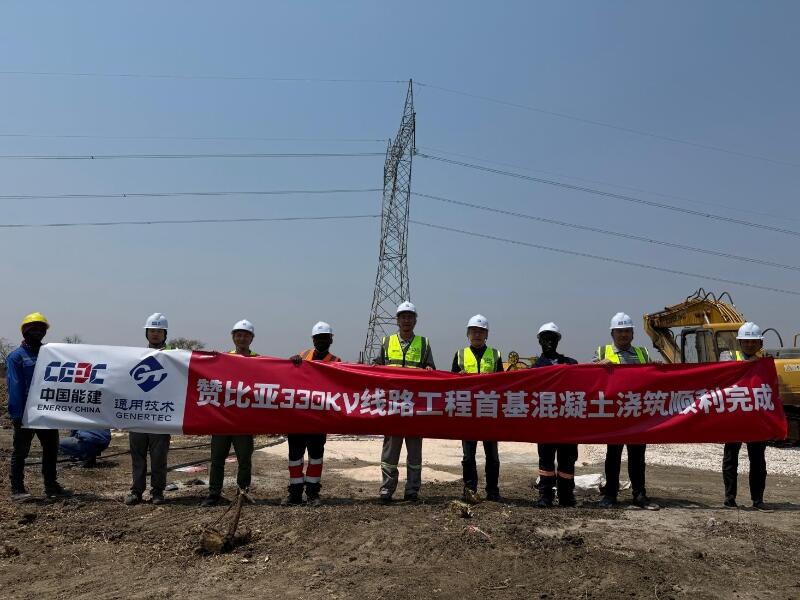
First Foundation Concrete Pour Successfully Completed for Zambia Kafue West–Muzuma 330kV Transmission Line EPC Project
Hot News

评论 (0)