In 2024, large-scale equipment renewal policies were introduced one after another. The release of these policies should have been like a huge rock thrown into a lake, setting off massive waves across the construction machinery industry. However, judging from current market performance, they seem not to have achieved the expected driving effect. What reasons lie behind this? Let us explore in depth together.
Policy Tailwinds Keep Coming, but the Push Has Yet to Bear Fruit
In March 2024, the State Council issued the Action Plan for Promoting Large-Scale Equipment Renewal and Trade-In of Consumer Goods. In July, the National Development and Reform Commission and the Ministry of Finance issued Several Measures on Strengthening Support for Large-Scale Equipment Renewal and Trade-In of Consumer Goods. In September, the Ministry of Industry and Information Technology released the Guide to Equipment Renewal and Technological Transformation in Key Industrial Sectors. During this period, a series of subsidy policies were also released one after another. In April, Shanghai issued a draft for public comment on renewal subsidies for "National Stage II" non-road mobile machinery, with excavators eligible for subsidies of up to 360,000 yuan. In October, Beijing issued a policy on scrapping and renewing non-road mobile machinery, offering subsidies of up to 287,000 yuan and 227,000 yuan for scrapping and replacing excavators and loaders, respectively. The strength of this policy support filled industry insiders and investors with expectations for a recovery in the construction machinery industry.
However, the reality has differed from expectations. Although multiple policies were released in 2024, the market performance of the construction machinery industry has not improved noticeably. The only two equipment renewal events that generated heated discussion in the industry this year also drew considerable criticism from insiders.
The first was the online rumor that Shijiazhuang required all non-road mobile machinery at construction sites (excavators, loaders, forklifts, etc.) to meet National Stage IV emission standards or above, with non-compliant machinery to be cleared from sites. At the time, most construction machinery self-media bloggers spoke out in complaint. One blogger said: "I just bought a National Stage III machine two years ago and haven't even finished paying off the loan, let alone made a profit. Now it's not allowed to be used—isn't this cutting off our path?"
Subsequently, within just one week, new word came from Shijiazhuang: non-road mobile machinery operating on site must meet exhaust emission standards and be filed with the environmental protection department, must have a National Stage III or above environmental protection label, and the use of National Stage IV or new energy construction machinery was encouraged. Only then did the wave of criticism gradually subside.
The second was a document from the Linfen Municipal Housing and Urban-Rural Development Bureau explicitly stating that all non-road mobile machinery at construction sites in the urban area of Linfen must be fully replaced with new energy machinery by the end of May. Starting in June, any use of non-new-energy machinery found would result in work stoppage and rectification. Shortly after the document was issued, local deliveries of new energy equipment ushered in a boom. On May 14, a major manufacturer in Taiyuan, Shanxi successfully delivered 15 electric excavators to a user in Shanxi. On May 15, the Linfen Municipal Group in Shanxi, after investing more than 30 new energy electric construction machines at once last year, purchased electric excavators and loaders in bulk again.
The "one-size-fits-all" withdrawal of fuel-powered construction machinery from the market in the name of environmental protection can, in a sense, indeed reduce the number of market competitors, raise equipment rental prices, and create new rigid market demand. But this renewal demand imposed on the market from outside seems somewhat hasty.
Analysis of Why Large-Scale Equipment Renewal Did Not Occur in 2024
Looking back at 2024, the expected large-scale equipment renewal did not happen, and actual market performance was somewhat too "subdued." The reasons can be explained from two aspects.
01 Time Lag in Policy Implementation and Advancement
Time is needed for funding to be in place and implementation rules to be formulated: Although the policies have been released, everything from fund allocation and disbursement to the formulation and refinement of specific implementation rules requires a process. For example, the large-scale subsidy funds arranged by the Ministry of Finance and ultra-long-term special government bonds require coordination and implementation by government departments at all levels before enterprises can truly benefit from this funding support for equipment renewal. During this period, it is difficult for the construction machinery industry to quickly feel the full driving force of the policies.
Impact of project preparation and launch cycles: Even if enterprises are willing to renew equipment, everything from project preparation, equipment selection, and procurement bidding to final installation and commissioning takes time. Especially for large engineering projects and enterprises, decision-making processes are relatively complex, which also means the policies' pulling effect on the industry cannot appear immediately.
02 Constraints from the Industry's Own Characteristics and Current Situation
Market saturation and equipment inventory issues: After years of development, the equipment inventory in the construction machinery industry has reached a certain scale, and market saturation is high. Many enterprises and engineering projects may not urgently need large-scale equipment renewal in the short term. Take tower cranes, for example. The current national inventory of tower cranes is about 300,000 units, but given the current state of China's real estate market and infrastructure construction, only about 150,000 to 160,000 units can be supported. Under such circumstances, compared with equipment renewal, how to eliminate outdated equipment is the primary issue.
Consideration of equipment renewal costs and benefits: Construction machinery and equipment are expensive, and renewing equipment requires enterprises to invest substantial funds. For some enterprises, especially small and medium-sized ones, this may create funding pressure, and they need to weigh the benefits and costs of renewing equipment. If enterprises expect future market demand to be unstable or insufficient to support the production capacity of new equipment, they may delay equipment renewal plans, thereby affecting the policies' driving effect on the industry.
Will an Equipment Replacement Wave Arrive in 2025?
Since large-scale equipment renewal did not occur in the construction machinery industry in 2024, will an equipment replacement wave arrive in 2025? This question should still be examined from multiple perspectives.
From the policy perspective, large-scale equipment renewal is mainly led by policies, but policy implementation is often affected by various factors, such as the speed at which local governments introduce supporting policies, the status of funding implementation, and the degree of enterprise cooperation. Therefore, the effect of policy-driven efforts is actually difficult to predict, but judging from the overall driving effect this year, next year's effect remains open to question.
From the industry perspective: The industry as a whole is currently in a stage of bottoming out in the cycle. In 2024, China's excavator sales achieved positive growth, which is a positive signal, and the industry will most likely bottom out and move upward overall next year. At the same time, the previous upward cycle of construction machinery began in 2016. Calculated on the basis of an 8-year service life, equipment sold in the previous round has already entered a period of large-scale lifespan replacement, and 2025 is expected to see significant replacement demand.
From the enterprise perspective, the industry downturn over the past three years has sharply increased funding pressure on many enterprises. At this critical juncture, getting them to spend real money on equipment replacement will not be easy. Large engineering contracting enterprises have funds for equipment transformation and may be able to bear it after enjoying trade-in subsidies. But if small construction machinery business owners do not have long-term engineering contracts, given the current machine-shift fee levels and the difficulty of collecting project payments, they will most likely not easily replace equipment.
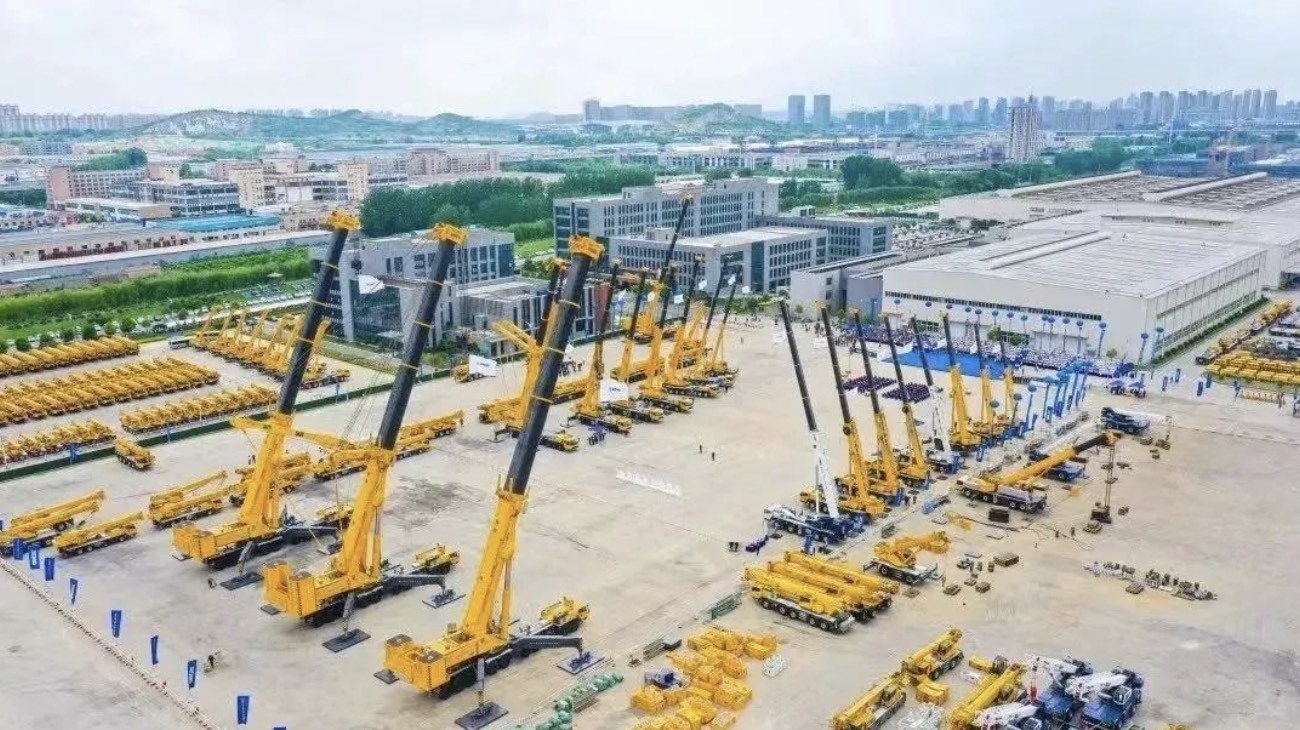
The release of large-scale equipment renewal policies has brought new opportunities to the construction machinery industry, but the current driving effect on the industry is not obvious. This is the result of multiple factors working together, including the overall economic environment, the lag in policy implementation, and the industry's own problems. Regardless, new opportunities and challenges have already emerged, and the market is no longer lifeless. For enterprises, being in the midst of this situation, no matter whether a replacement wave arrives in 2025, continuously strengthening themselves is the top priority. Only in this way can they remain invincible in the future.
Zoomlion Chairman and CEO Zhan Chunxin Attends Saudi Market Key Customer Exchange and Technology Launch Event
下一篇SDLG Signs University-Enterprise Cooperation Agreement with Century-Old Malaysian University, Opening a New Chapter in International Talent Cultivation

2025-10-11 12785 0

2025-10-11 12334 0

2025-10-11 12498 0

2025-09-11 12042 0

Lize City Air Terminal Underground Main Structure Nearing Completion: Maximum Transfer Walk Under 4 Minutes After Operation

Anti-seepage Curtain for Main Lock Pit of CSCEC Port Shenqiu Double-Line Lock Project Completed on Schedule

All Pile Foundations Completed on Quanzhou Baiqi Channel

Hainan Upgrades Housing and Municipal Infrastructure
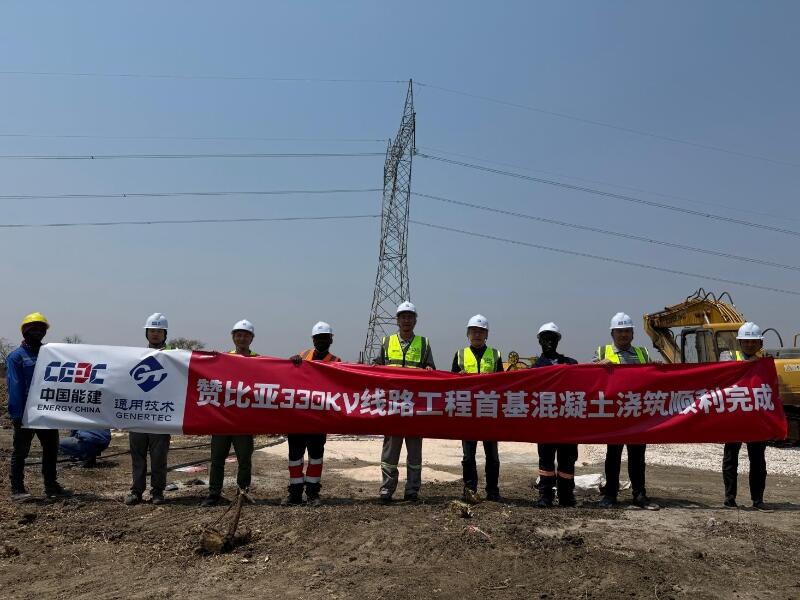
First Foundation Concrete Pour Successfully Completed for Zambia Kafue West–Muzuma 330kV Transmission Line EPC Project
Hot News

评论 (0)