Reverse Engineering Design
商品详情
Reverse Engineering Design
Solution Overview
Reverse engineering design, as the name suggests, differs from the forward design process: its procedure relies on data obtained from the surfaces of existing parts or product prototypes to build a 3D CAD model. With the widespread application of machine vision technology in the manufacturing field, and especially the rapid development of digital measurement, acquiring the spatial data of object surfaces through 3D scanning technology for product modeling design has become an important application direction of reverse engineering.
Operating Steps

Acquire point cloud data using a 3D laser scanner.
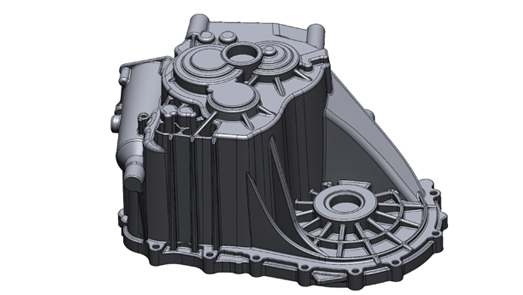
Process the point cloud data with Zhongguan 3D editing software to obtain triangular mesh surface data. Perform preprocessing on the STL data such as coordinate transformation, point cloud noise reduction, smoothing, optimization, and simplification. The data obtained at this step can be used directly for 3D engraving, 3D printing, comparative analysis, and so on.
Process the obtained triangular mesh surface data with reverse engineering software; professional software such as UG, CATIA, and GEOMAGIC DX can generally be used. This includes many feature extraction methods such as patch fitting, section creation, and curve extraction, at which point innovative design, optimized design, and so on can be carried out.
Through a series of operations such as software-based extension and trimming, a reverse-engineered parametric model is obtained, which can be used for high-precision CNC machining, mold design, and so on.
The above steps constitute a standard workflow and do not necessarily all need to be completed. Each step has well-established CAD/CAE/CAM software to perform the relevant operations; for some applications, the STL 3D data model can even be imported directly into a 3D printer or CNC engraving machine for direct printing or engraving.


Customer Case
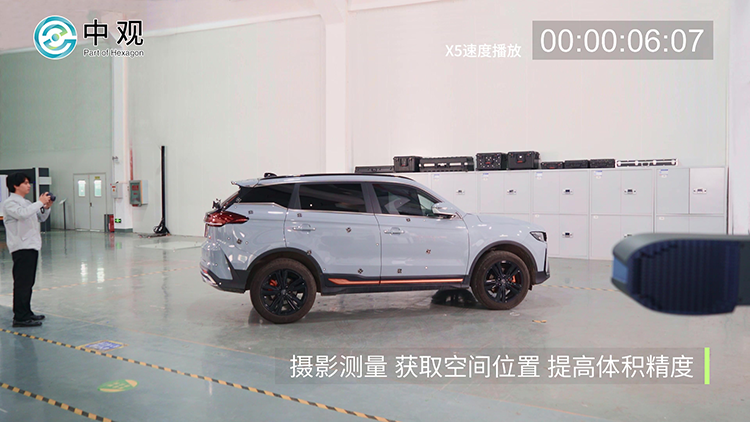
HyperScan Takes on the Challenge of Completing 3D Scanning and Modeling of a Whole Vehicle in 10 Minutes